
Zinc alloys electroplating is no longer a new knowledge to electroplating technology. Zinc-aluminum die-casting parts mainly use zinc for manufacturing, and they have a very thin layer on the surface.
The inside is a porous structure. Meanwhile, it is also an active amphoteric metal. Using proper treatment methods and the electroplating process can ensure the electroplated layer of zinc alloys has good adhesion and make it a qualified product.
It is necessary to strictly control each section of the process to ensure good zinc alloy electroplating.
As the domestic economy boosts, China pays much more attention to environmental protection. As a high energy consumption and high pollution industry, its cost is increasing due to the impact of the Covid pandemic.
The development of new technology is quite essential, and it is the duty of all electroplating professionals.
Why Zinc Die Castings Need Baking Before Plating
Most zinc alloys are die casting parts. Because cooling temperatures vary after die casting, surface segregation can occur easily.
The castings have to be pre-heated (also for de-stressing), and check if there are any bubbles after baking by high temperature. If there is, then we cannot polish or electroplate.
The high-temperature baking treatment is required to practice in the 150℃ oven and maintain the temperature for over half an hour till there are no blisters, which indicates that the part is qualified.
Usually, many blank die casting makers fail to see it; however, this has been a necessary procedure in other countries.
This process not only eliminates the blisters on the blank which resulted from air trapping but also prevents the risk of part scrapping due to the blisters after electroplating or electrophoresis.
Designing Zinc Die Castings for Better Surface Finishing
Die casting parts have the characteristics of compact outer layers and loose inner walls, so the design of die casting mold and die casting technique is essential.
When designing a product, there are some factors that we need to consider: is it easy to polish and hang up, will the cylinder fall off in electroplating, or will the portion be hidden in the blind holes.
Next, the plane workpiece should be designed into a slightly cambered surface, with a few degrees smaller if it does not assemble into a 90-degree vertical plane (only a few degrees smaller virtually still looks like a plane, but this is quite beneficial for the follow-up, like polishing, electroplating, packaging, etc.).
However, it is very likely to have surface defects, like blisters, poor die casting, water stains, cracks, shrinkage cavities, pitting, spots, etc.
It is only an excuse to deceive themselves by only asking polishers to polish off these defects. The result is not only time wasted but also money.
Why Zinc Die Castings Need Prompt Plating
Zinc die casting alloys are consist of zinc, aluminum, copper, and magnesium. Zinc constitutes 95%~96%, and aluminum accounts for 3.5%~4.3%. The remaining are copper and magnesium.
Zinc and aluminum are active amphoteric metals with poor chemical stability. They are easily oxidized and eroded in the air.
So it is not recommended to store the zinc alloy blanks for long after die casting. Besides, if the product gets in touch with water or rain before electroplating, it shall be electroplated immediately, no more than 12 hours at least.
If it cannot be electroplated immediately, it needs to dry and be re-polished, or there will be pitting and blistering.
Choosing Mold Release Agents and Polishing Compounds for Plating
For zinc and aluminum die casting parts must choose a good mold release agent.
Do not use heavy oil, like Vaseline or industrial greases working as a mold release agent, or the base copper cannot be plated due to the oil in the cavity or places that cannot be polished.
Another thing is the selection of a water milling brightener in water milling. Improper selection will lead to an organic layer that is hard to remove on the surface after polishing.
This layer could cause bubbles even if it is just slightly baked. So, we have to remove the wax by soaking it in concentrated sulfuric acid and then use Lejiang LJ-d009 stripping powder to remove this layer thoroughly.
Preventing Plating Defects in Screw and Blind Holes
As die casting parts have a complex structure and many screw holes and blind holes, this part is likely to have burrs after plating.
The best way to deal with it is to plug the holes with corresponding screws. For those blind holes which do not have screws, we can clean them with ultra-waves, which would not pollute the plating bath due to the potion.
Ensure Proper Venting During Plating
For complex-shaped ones, we should pay attention to the venting when hanging up, especially the zinc alloy components.
We cannot do plating on a pre-plated copper layer due to poor venting, which would lead to burrs due to corrosion in acid copper.
Cleaning and Activating Zinc Alloys Before Plating
For zinc alloys with higher quality requirements, we would hang up and remove the wax by thermal desorption ultrasound, then remove the oil by cathode electrolysis to make the part ready for pre-plating after activation.
It is worth noticing that oil cleaned by cathode electrolysis should use circulating filtration with the metal complexing agent to prevent the metal from being deposited on the part surface, causing dimness. The acid concentration in the activation tank should not be too high to keep the part’s original color.
If it is possible, we can use activated carbon circulating filtration. There are slight bubbles during activation. So, it won’t be pitting.
Copper Strike and Build-Up Plating for Zinc Alloys
Zinc alloys should be better impact plated by 0.5~1.0 m in cyanide pre-plating copper with high cyanide and low copper, and then thicken it in cyanide pre-plating copper with low cyanide and high copper.
As the decomposition of sodium cyanide will produce free alkali, we should prevent the PH from increasing. Equation: N aCN +H O =N aO H +H CN ↑
Choosing a Power Supply for Cyanide Copper Plating
Selection of the alkali copper power supply: Whether zinc alloy parts can be electroplated successfully or not depends on the alkali copper.
Thus, we should control the process carefully and pay attention to the alkali copper power supply.
Shipu Yuan, an electroplating expert, introduced that cyanide pre-plating copper uses a power supply with a high ripple coefficient and gap or periodic commutation.
This is more impact on the copper layer is from a low-ripple DC power supply since it has a higher semi-bright range and anti-impurity capability.
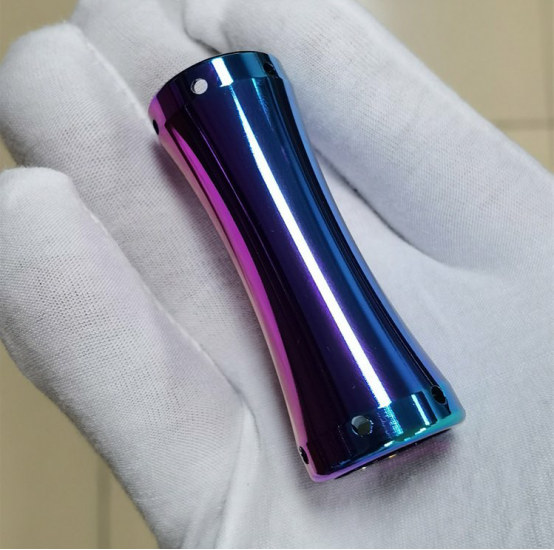
Do your die casting projects need electroplating?
GREFEE has many years of experience in zinc alloy die casting production and zinc alloy surface treatment.
If you need electroplating for your part surface, GREFEE is a perfect choice and will help you know if the design of your product is reasonable.
Along with our long-term electroplating partners, we will evaluate your electroplating products, as well as fixture design, sample making, etc.
Contact us now to initiate your zinc alloy die casting project or select other manufacturing services you need.