PEEK – High-Performance Plastic
Comprehensive Application Analysis of Properties & Processing Technologies

Posted on : March 6, 2026 | By GREFEE
Author: Christopher Position: Manufacturing Manager
Writer: Christopher Role: Manufacturing manager
PEEK is a high-performance special engineering plastic first successfully developed in the 1970s. Since its inception, it has been widely applied in numerous fields with stringent material requirements by virtue of its outstanding comprehensive properties, emerging as a crucial alternative to traditional materials such as metals and ceramics. As a high-performance engineering plastic, PEEK is also the most expensive plastic raw material. It integrates multiple advantages including high temperature resistance, chemical corrosion resistance, high mechanical strength, and excellent biocompatibility. It can not only maintain stable performance in extreme environments but also meet the processing requirements of precision manufacturing, making it an indispensable key material in modern high-end manufacturing.
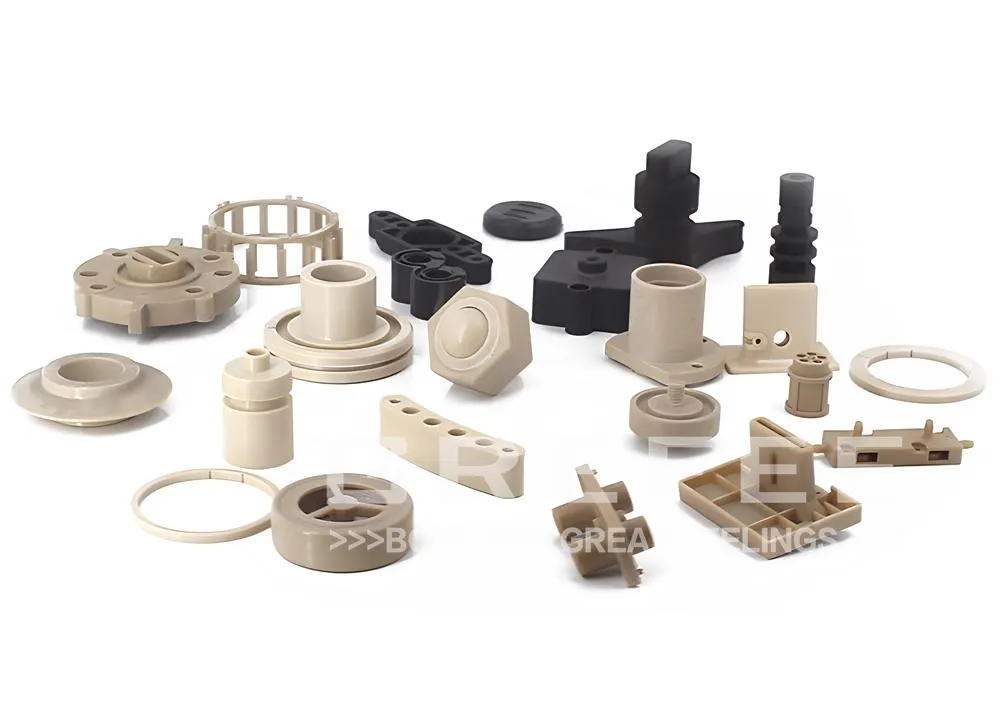
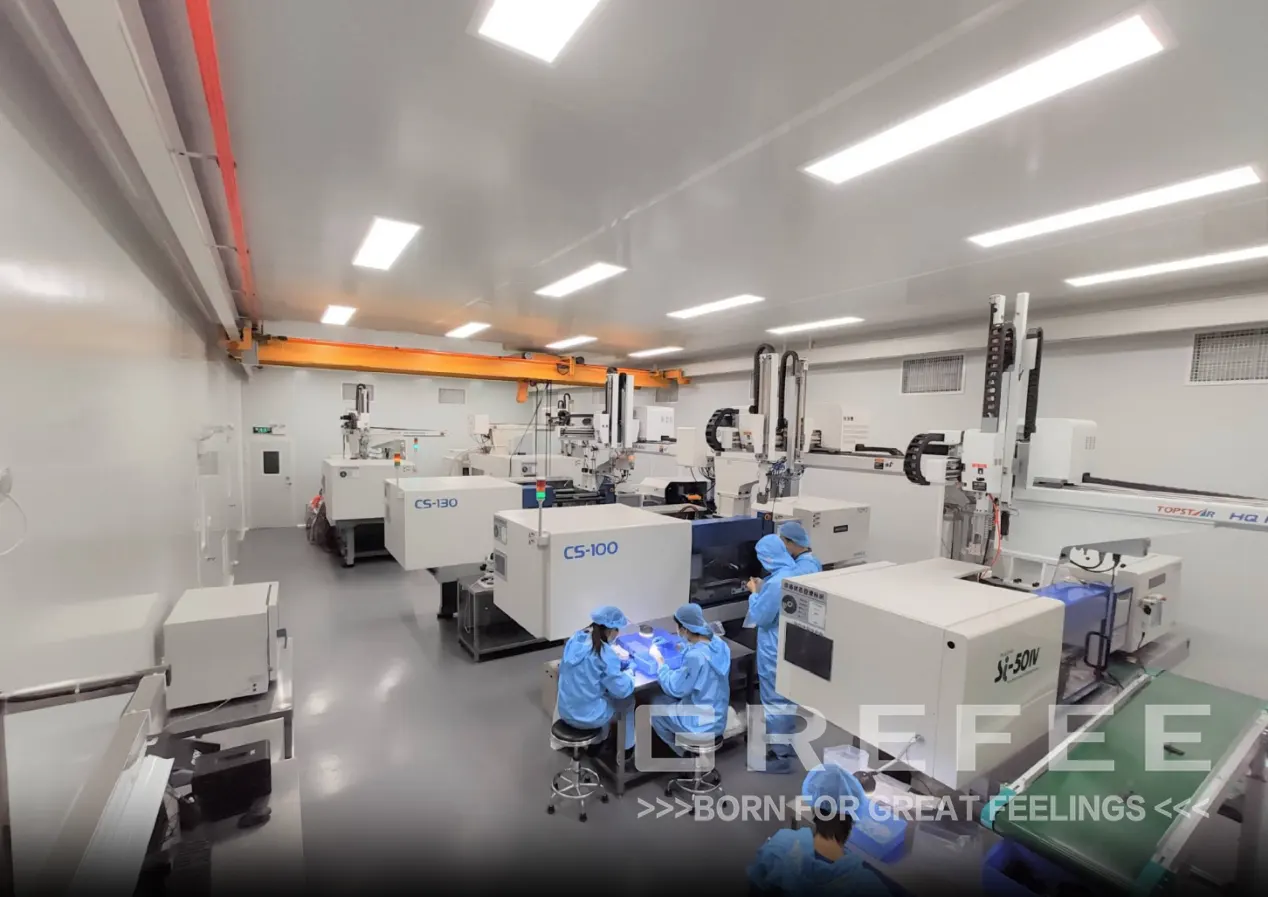
With over 20 years of development, GREFEE has always ranked among the world’s top supply chain service providers in the PEEK product field. We specialize in providing full-process technical solutions for PEEK, covering 3D printing, mold manufacturing, injection molding, CNC precision machining, extrusion molding and gear machining of PEEK materials. Meanwhile, we have a Class 100,000 clean room dedicated to PEEK injection production and are equipped with 300 sets of precision CNC processing equipment, ensuring high-quality delivery with complete production capacity and rigorous manufacturing processes.
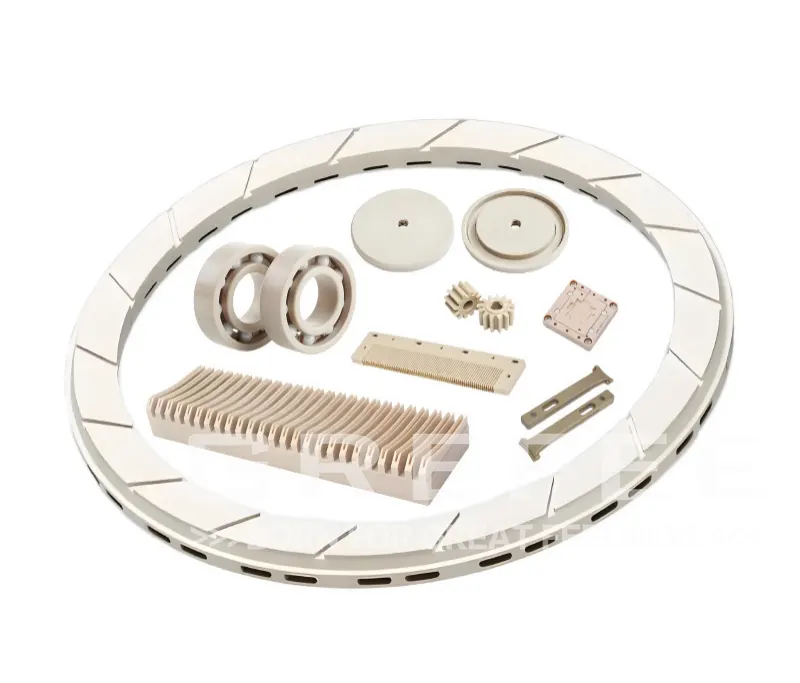
Properties of PEEK Material
The excellent performance of PEEK material stems from its unique molecular structure, which also endows it with a number of prominent characteristics. Therefore, PEEK material occupies an important position in various key fields.
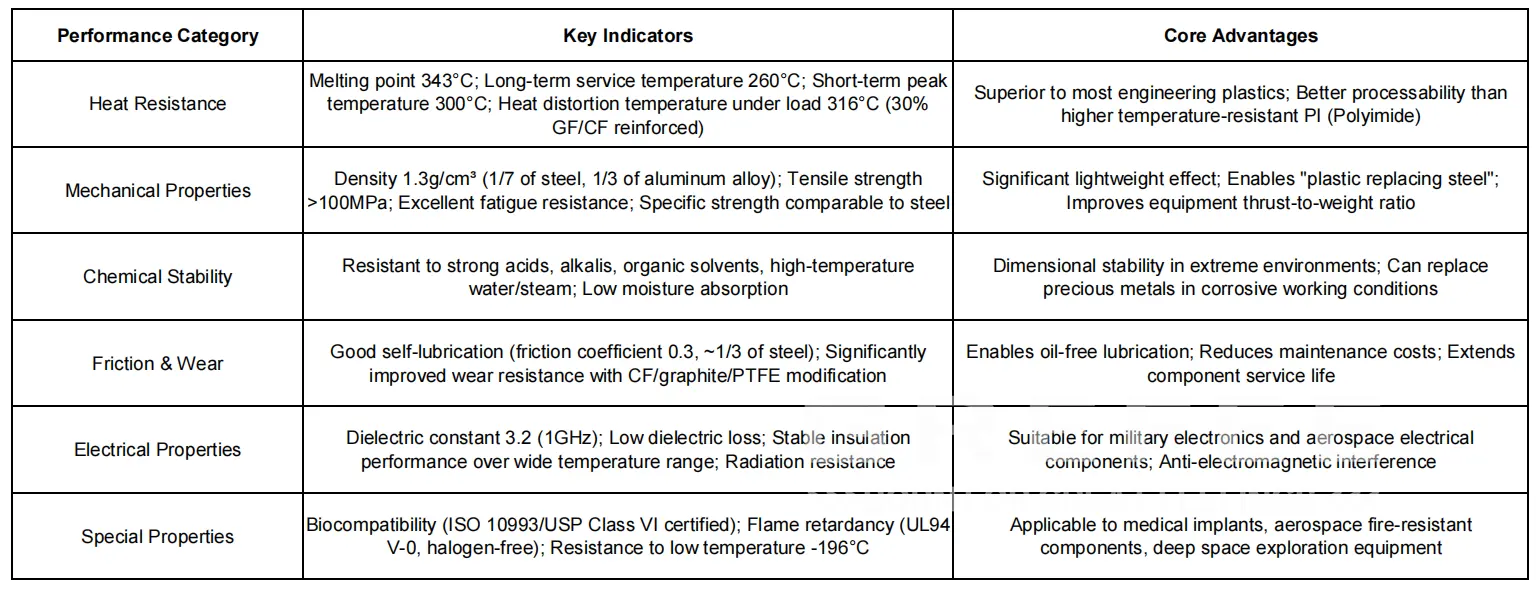
High Temperature Resistance:
PEEK has a glass transition temperature of approximately 143°C and a melting point as high as 343°C, with a long-term service temperature stably maintained at around 250°C and a short-term service temperature even exceeding 300°C. In high-temperature environments, its mechanical properties show a small decline without obvious softening or decomposition. Thus, PEEK meets the application requirements of high-temperature working conditions such as aerospace and automobile engines. For example, PEEK components in aircraft engine nacelles can withstand continuous high temperatures of 200-250°C for a long time while maintaining stable performance.
Mechanical Strength and Rigidity:
PEEK exhibits excellent tensile strength, flexural strength and impact strength, along with good rigidity and fatigue resistance. At room temperature, its tensile strength can reach 90-100MPa and flexural strength is about 130-150MPa. Even in high-temperature environments, its mechanical properties can remain at a high level. In addition, it has excellent creep resistance with small deformation under long-term stress, making it suitable for manufacturing structural parts bearing long-term loads, such as mechanical transmission gears and bearing cages.
Chemical Corrosion Resistance:
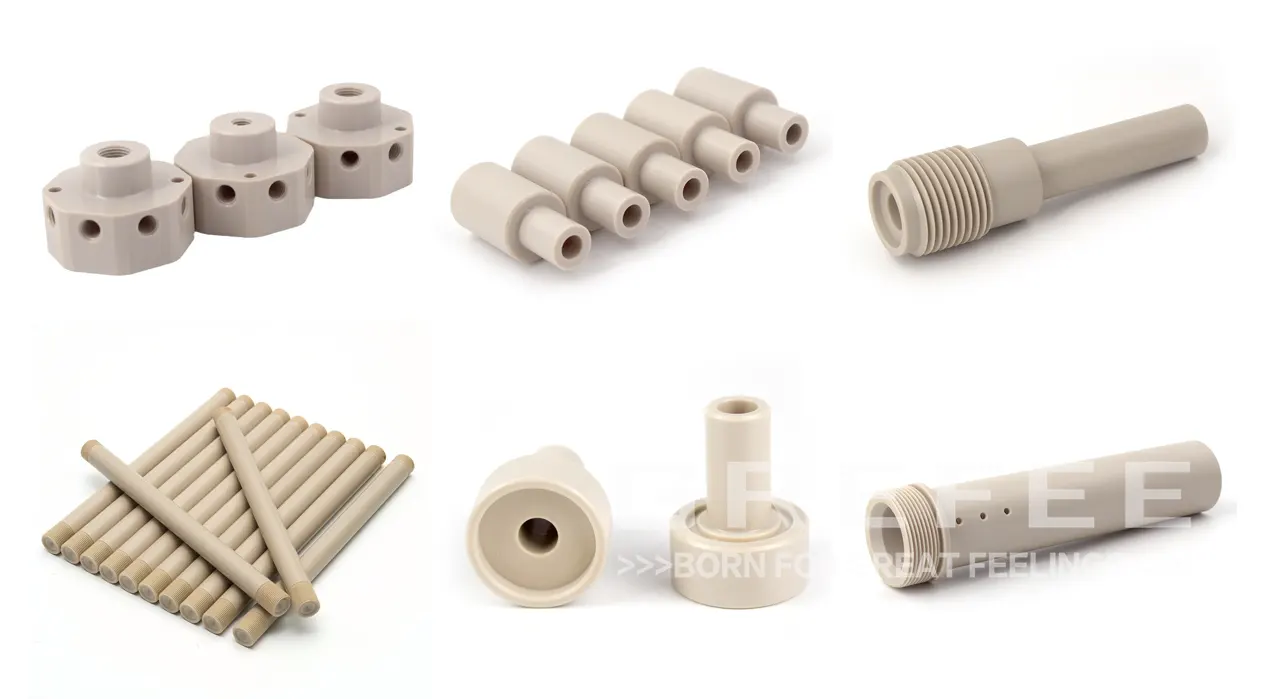
PEEK has excellent corrosion resistance to a variety of chemical media, including organic acids, inorganic acids, alkaline solutions, organic solvents and various oils. In the chemical industry, components such as pipes and valve liners made of PEEK can contact corrosive media for a long time without aging, dissolution or performance degradation, effectively extending the service life of equipment.
Biocompatibility:
PEEK features good biocompatibility, being non-toxic and non-irritating. It will not cause rejection reactions of the human immune system and can maintain a good interface combination with human tissues. After surface modification, its biological activity can be further enhanced to promote the adhesion and proliferation of osteoblasts. Therefore, it is widely used in the medical field to manufacture orthopedic implants such as artificial joints, spinal fusion devices and dental restorations.
Electrical Insulation Performance:
PEEK has excellent electrical insulation performance with a low dielectric constant and a small dielectric loss tangent. Its electrical properties remain stable over a wide temperature range (-40°C to 250°C) and in high-frequency environments. At the same time, it has good arc resistance and corona resistance, making it suitable for manufacturing high-end electrical insulation components such as cable insulation layers for aerospace and connectors for electronic equipment.
Wear and Friction Resistance:
PEEK has a low friction coefficient (the dry friction coefficient is about 0.3 when mated with steel) and excellent wear resistance, and can maintain good wear resistance under non-lubricated or boundary lubricated conditions. Its wear and friction resistance can be further improved by adding fillers such as carbon fiber, graphite and polytetrafluoroethylene (PTFE), making it suitable for manufacturing easily worn components such as bearings, sliding guide rails and seals, thus reducing friction loss during equipment operation.
Coefficient of Thermal Expansion Characteristics:
PEEK has an excellent temperature-stable coefficient of thermal expansion. The linear thermal expansion coefficient of pure PEEK in the range of room temperature to 150°C is much lower than that of ordinary engineering plastics and is closer to that of metal materials. The coefficient of thermal expansion of reinforced PEEK will be further reduced with the type and proportion of filling materials, showing excellent dimensional thermal stability.
The low and stable coefficient of thermal expansion of PEEK prevents obvious thermal expansion and contraction deformation in working environments with alternating temperatures, effectively ensuring the dimensional accuracy of precision components. This characteristic gives PEEK a significant application advantage in fields with stringent requirements for dimensional thermal stability, such as aerospace precision structural parts, high-precision automotive transmission components and high-frequency connectors for electronic equipment.
Classification of PEEK Material:
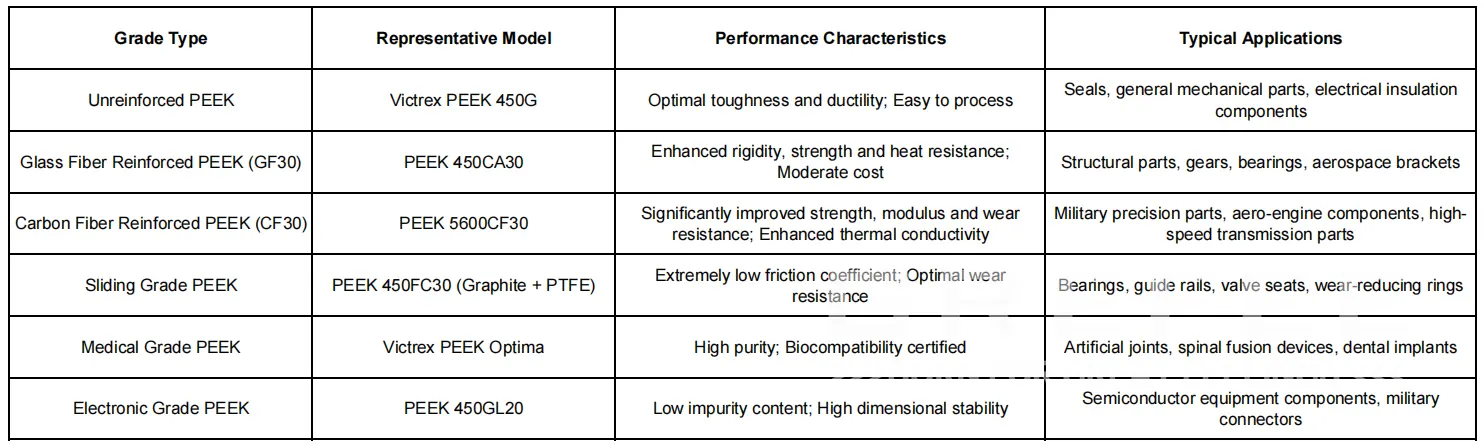
PEEK can be divided into various types according to different classification criteria. In terms of purity, it is mainly divided into pure PEEK and reinforced PEEK; after adding filling materials to PEEK to change its properties, it is classified into wear-resistant, thermally conductive and flame-retardant types according to main functions.
Pure PEEK:
It refers to PEEK resin without any fillers, with the basic properties of PEEK materials such as high temperature resistance, chemical corrosion resistance, good mechanical properties and electrical insulation performance. Pure PEEK is easy to process and form, and can be made into various structural parts with simple structures through injection molding, CNC machining, compression molding and other methods, which is widely used in electrical insulation, food contact components and other fields.
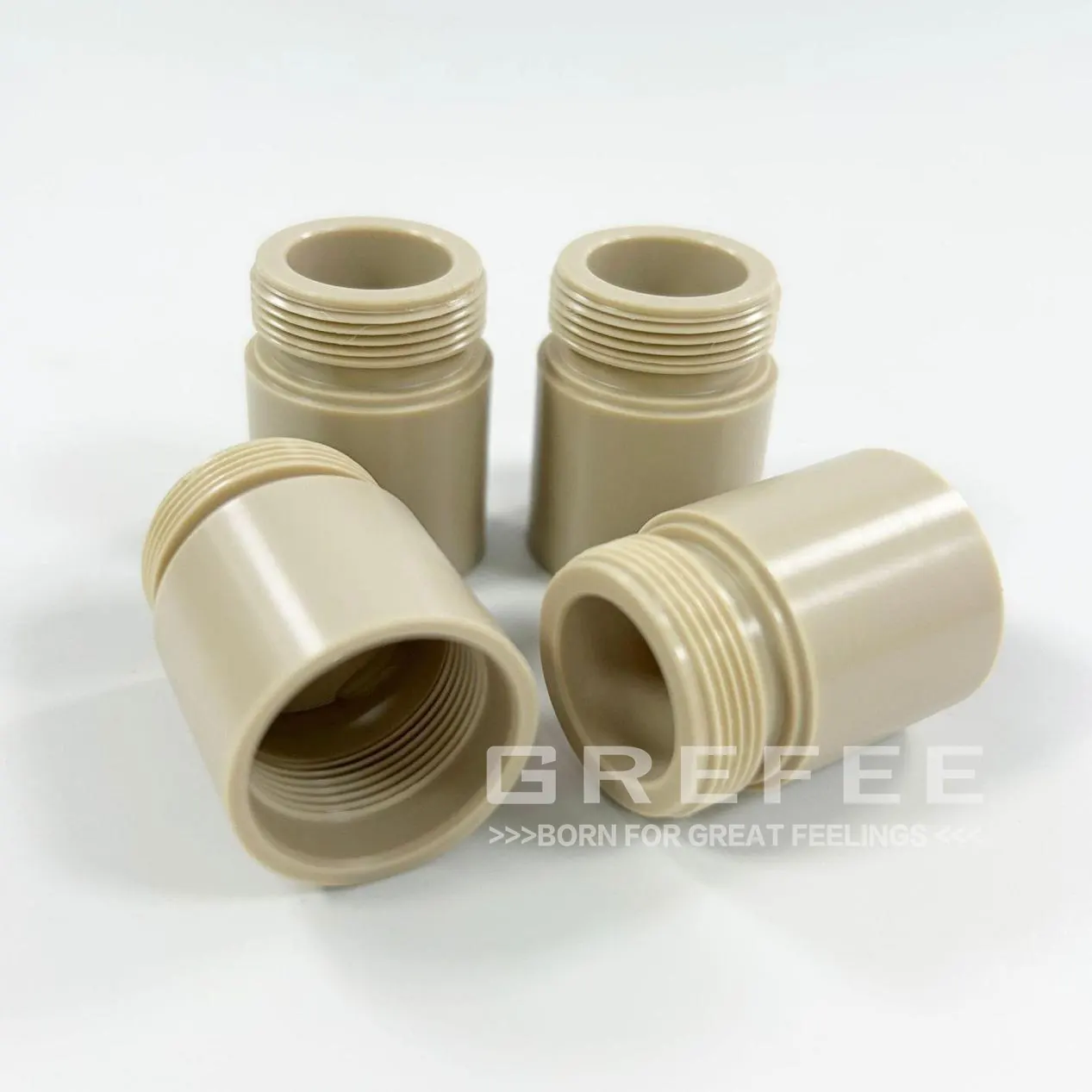
Reinforced PEEK:
It is made by adding reinforcing materials to improve the mechanical strength, rigidity and creep resistance of PEEK. Among them, carbon fiber reinforced PEEK has the most significant improvement in strength and modulus. For example, PEEK with 30% carbon fiber added has a substantial increase in tensile strength, which is suitable for manufacturing aerospace structural parts and high-end mechanical parts; glass fiber reinforced PEEK has more advantages in cost with a moderate improvement in mechanical properties, and is often used in automotive parts, electronic equipment housings and other fields.
Main Production Methods
PEEK has excellent high temperature resistance, wear resistance and chemical stability. Compared with ordinary plastics, it can maintain good mechanical strength in an environment up to 250°C and has good resistance to acids, alkalis and organic solvents. Therefore, the production methods of PEEK have certain limitations. At present, the main production methods of PEEK include injection molding, CNC machining, extrusion, 3D printing and PEEK gear machining.
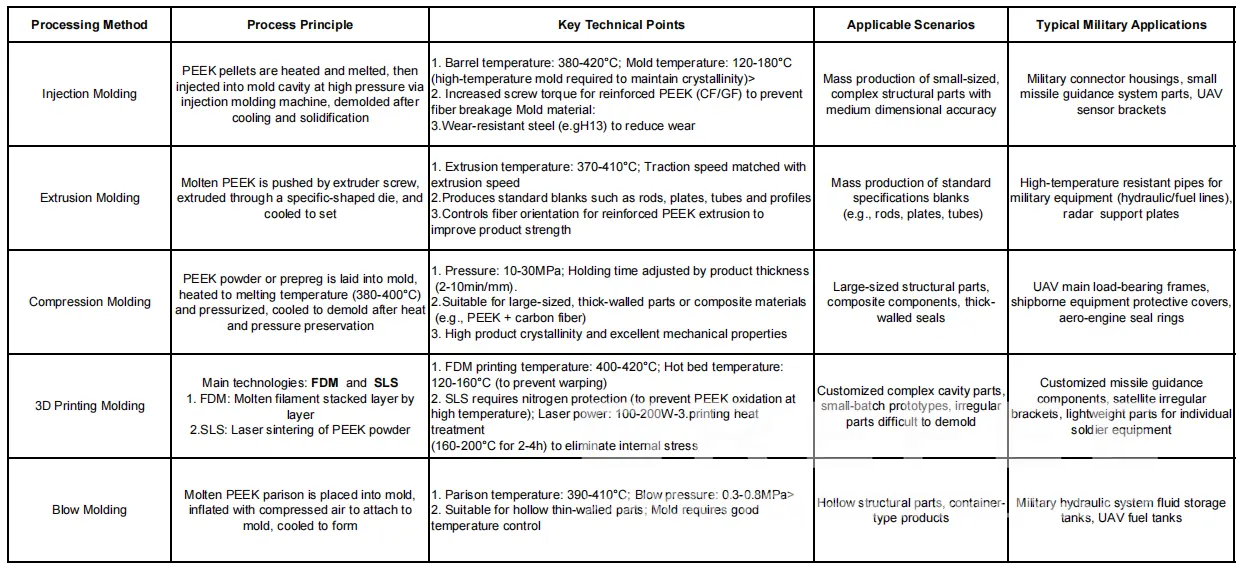
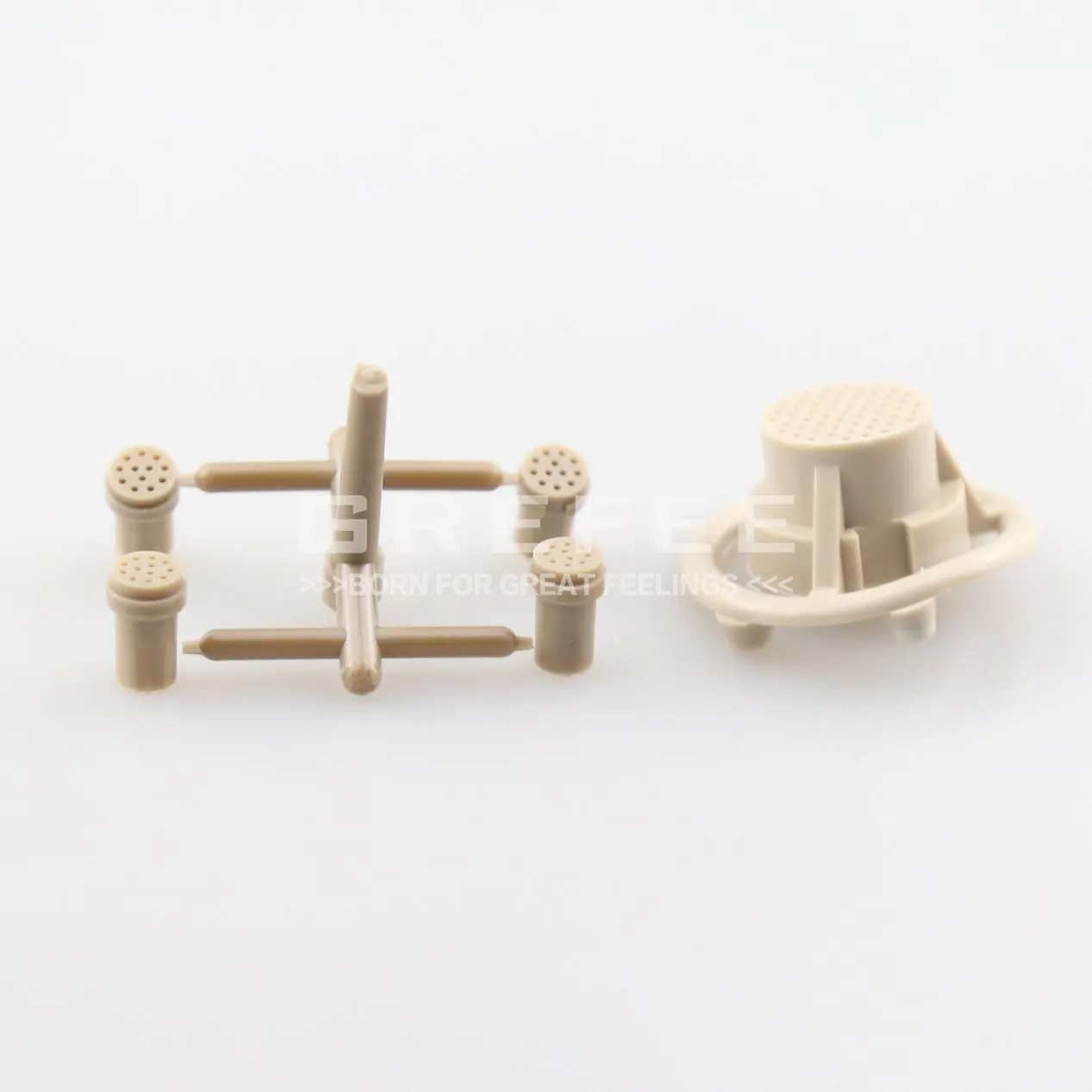
Injection Molding:PEEK injection molding is mainly for high-end products, suitable for manufacturing mass-produced products with complex structures and high precision requirements, such as medical products and automotive precision parts, which is the core process for the large-scale application of PEEK.
Core Processing Problems (Injection Molding
High melting point: The barrel processing temperature of PEEK needs to reach 380-420°C. Abnormal temperature will cause product discoloration and a sharp decline in mechanical properties, resulting in brittleness and cracking.
Large shrinkage rate: Especially for thick-walled or complex structural parts, shrinkage cavities and surface depressions are prone to occur, affecting dimensional accuracy and appearance.
Poor fluidity: For products with thin walls, micro sizes and complex cavities, incomplete filling and material shortage are likely to occur.
High abrasiveness: Reinforced PEEK in particular will cause wear of mold cavity and gate, leading to out-of-tolerance product dimensions.
Uneven shrinkage: Deformation is more prominent in flat and slender parts, and internal stress is easy to generate, resulting in warpage and deformation of products after demolding.
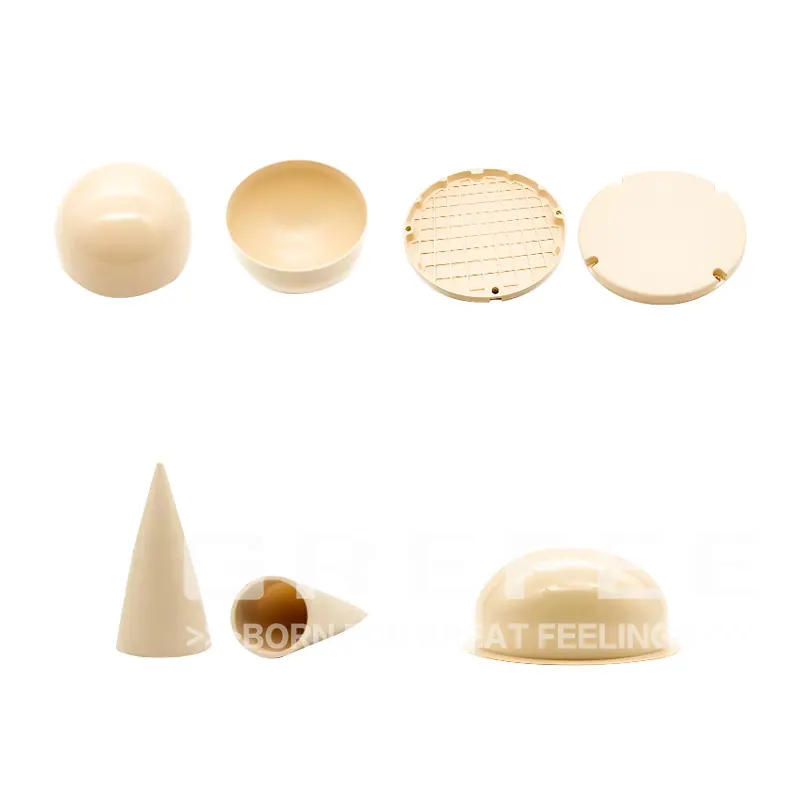
GREFEE’s Customized Solutions (Injection Molding)
GREFEE has not only built a Class 100,000 clean room that fully meets the production requirements of PEEK medical products, but also is equipped with multiple high-precision injection molding machines specially modified for the characteristics of PEEK materials, with a precise temperature control system that can achieve stable control of barrel temperature at 380-420°C with a temperature difference fluctuation of no more than ±2°C, effectively avoiding PEEK material degradation. Combining scientific mold testing and production, the dimensional tolerance of PEEK medical components produced by GREFEE’s injection molding can be controlled within ±0.005mm, meeting the precision requirements of high-end medical products. At present, we have mass-produced PEEK infusion pump valve cores, ultrasonic probe housings and other components for many medical equipment enterprises.
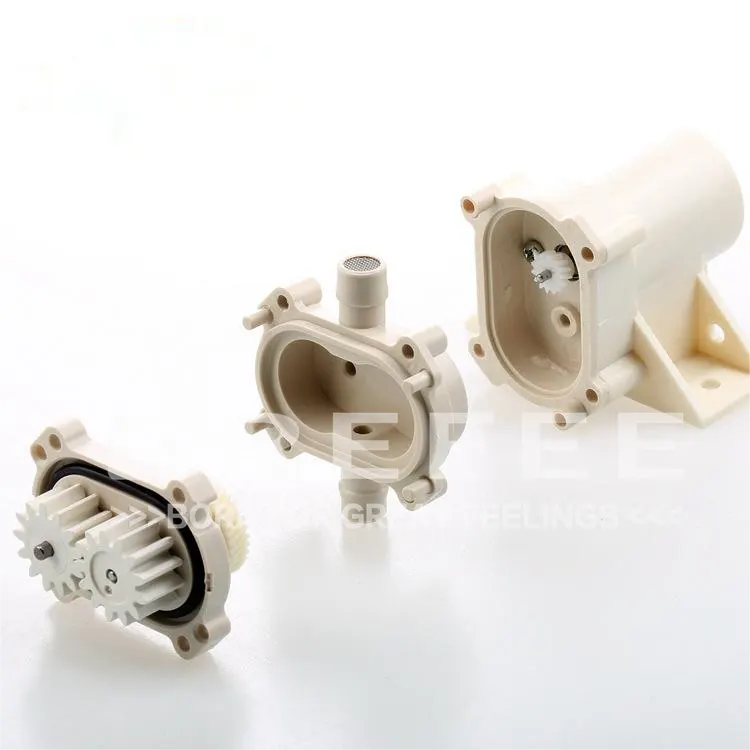
Precise temperature control to prevent degradation: Adopt specially modified high-precision injection molding machines with a multi-stage precise temperature control system to achieve stable control of barrel temperature at 380-420°C with a temperature difference fluctuation of no more than ±2°C; optimize the injection cycle to reduce the high-temperature holding time of the melt and avoid material degradation from the source.
Multi-stage holding pressure to solve shrinkage: Aiming at the crystalline shrinkage characteristics of PEEK, adopt a multi-stage holding pressure process, adjust the holding pressure and holding time according to the product structure, and combine scientific injection molding mode with years of practical experience (e.g., appropriately extend the holding time for thick-walled parts) and cooperate with mold constant temperature control to effectively eliminate shrinkage cavities and depression defects and ensure product density.
High-pressure and high-speed mold filling optimization: Increase injection pressure and speed, optimize gate position and size, adopt hot runner molds to reduce melt flow resistance, and use special micro-injection equipment for thin-walled and micro parts to ensure the filling process and solve the problem of material shortage.
Wear-resistant molds to extend service life: The mold cavity is made of high-end mold materials such as H13 wear-resistant steel and undergoes surface hardening treatments such as nitriding and quenching to improve mold wear resistance; for reinforced PEEK injection molds, add gate wear-resistant sleeves to ensure product dimensional stability.
Cooling to eliminate internal stress: Precisely control the mold temperature at 120-180°C, adopt a uniform water cooling system to ensure uniform product crystallization; conduct post-heat treatment of demolded products at 160-200°C to eliminate internal stress and completely solve the problem of warpage and deformation.
Comprehensive Mold Flow Analysis
CNC Machining:As a precision post-processing technology, CNC machining is mainly used for high-precision cutting of PEEK plates and bars to meet the requirements of complex structures, ultra-high dimensional accuracy and excellent surface quality. It is suitable for scenarios with extremely high requirements for dimensional accuracy and surface quality, such as complex structural parts in the medical and military fields, high-precision connector housings in the electrical field, and customized components for scientific research equipment.
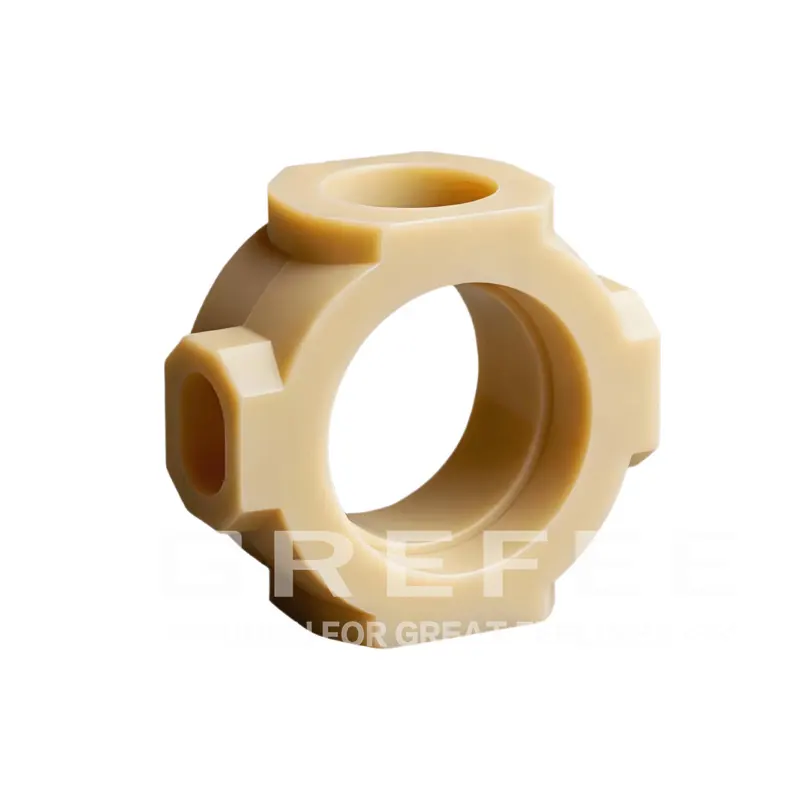
Core Processing Problems (CNC Machining)
Processing thermal deformation: Although PEEK is high temperature resistant, the local high temperature generated by tool cutting during processing is easy to cause workpiece thermal deformation, especially for thin-walled and slender parts. Cooling shrinkage after processing is prone to dimensional deviation, making it difficult to meet the ultra-high precision requirement of ±0.003mm.
Tool sticking and wear: PEEK material has high toughness, and chips are easy to adhere to the tool edge during cutting to form built-up edge, resulting in tool marks, burrs on the product surface and poor surface roughness.
Poor surface roughness: Under conventional cutting parameters, the PEEK processed surface is prone to scratches and delamination, making it difficult to meet the ultra-high surface quality requirement of Ra0.2μm or below in the military and medical fields.
High processing difficulty: For complex PEEK structural parts with multi-curved surfaces and special-shaped holes, ordinary 3-axis CNC machining requires multiple clamping, which is prone to clamping errors and leads to out-of-tolerance product geometric tolerances.
High deformation risk: PEEK plates and bars have internal stress during production. The stress is redistributed after material removal in CNC machining, which is easy to cause workpiece warpage and deformation, affecting the final precision.
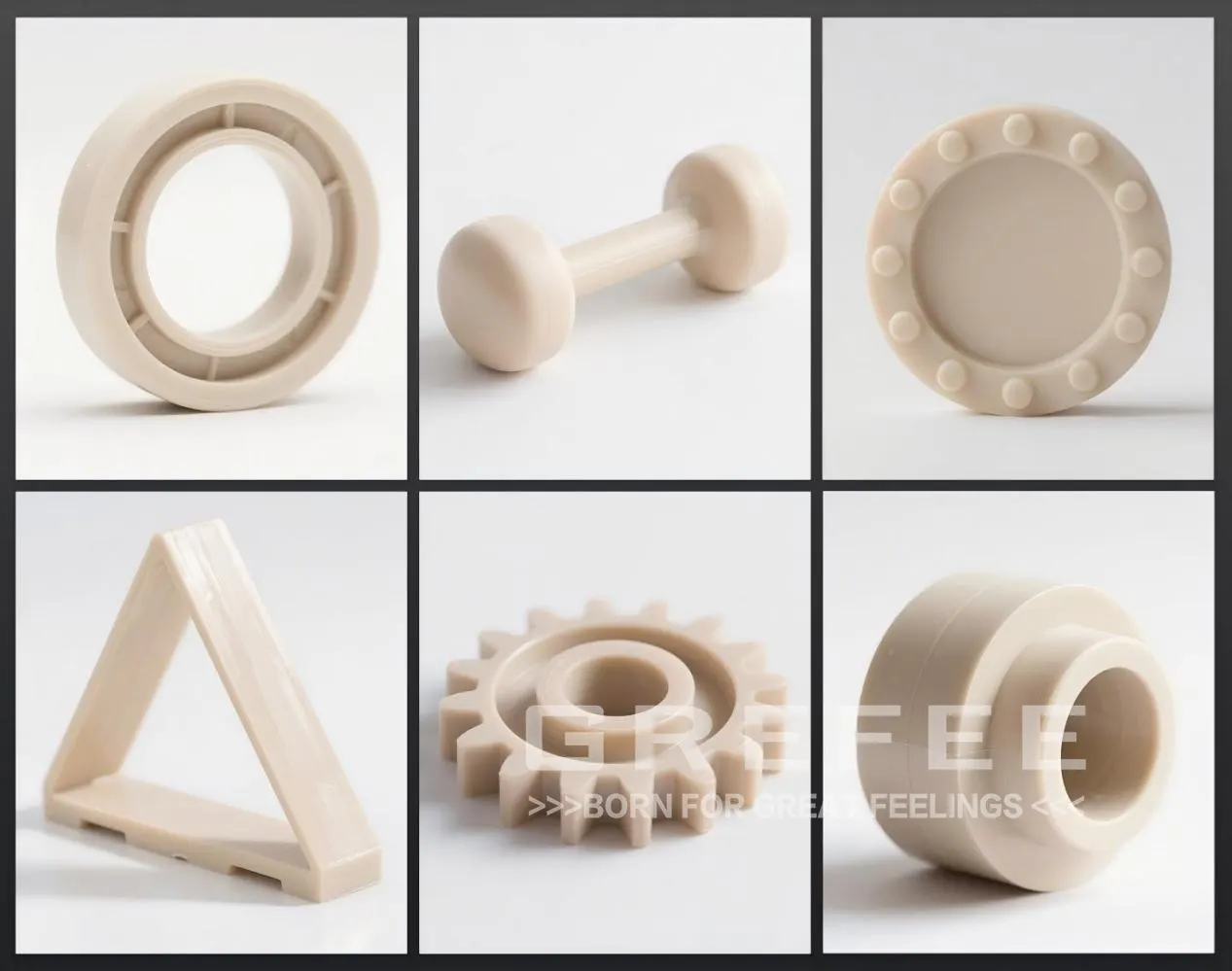
GREFEE’s Customized Solutions (CNC Machining)
GREFEE is equipped with multiple 5-axis simultaneous CNC machining centers and ZEISS high-precision testing equipment, which can realize the integrated processing of complex PEEK structural parts. Aiming at the high-precision requirements of the military field, the surface roughness of PEEK radar insulation brackets processed by our CNC can reach Ra0.2μm, and the dimensional accuracy is controlled within ±0.003mm, which has passed the rigorous verification of military customers.
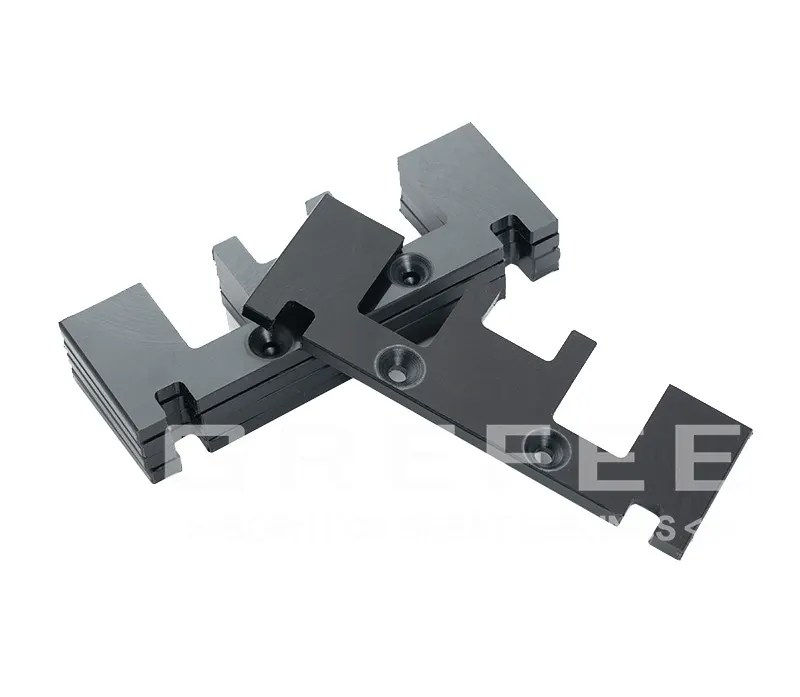
Cryogenic cutting to control deformation: Adopt high-pressure cooling cutting technology, conduct real-time cooling of the cutting area with special machine tools and special PEEK coolant to avoid workpiece thermal deformation; adjust cutting parameters according to the type of PEEK material to reduce cutting heat generation.
Tool and parameter optimization: Select cemented carbide tools to reduce cutting resistance, formulate exclusive cutting parameters, and combine the processing method of high speed, low feed and small cutting depth to effectively prevent tool sticking and built-up edge generation and extend tool service life.
Polishing to improve surface quality: Optimize the processing procedure, adopt multiple processes of rough machining – semi-finishing – finishing – precision polishing, and then use ultrasonic polishing, mechanical polishing and other processes to make the product surface roughness meet the ultra-high surface requirements of the military and medical fields.
5-axis simultaneous machining: Equipped with multiple 5-axis simultaneous CNC machining centers to realize one-time clamping and integrated processing of complex PEEK structural parts, completely eliminate positioning errors caused by multiple clamping, ensure geometric tolerance accuracy and improve dimensional stability.
Pretreatment and post-treatment: Conduct stress relief heat treatment of PEEK plates and bars at 120-150°C before processing to release the internal stress of raw materials, and perform secondary low-temperature stress relief treatment of precision parts after processing to prevent subsequent deformation caused by stress release.
Full-process precision inspection: Equipped with ZEISS high-precision testing equipment to conduct full-size inspection of semi-finished and finished products during processing, feed back processing precision in real time, and ensure that the product dimensional accuracy is controlled within ±0.003mm, which has passed the rigorous verification of military customers.
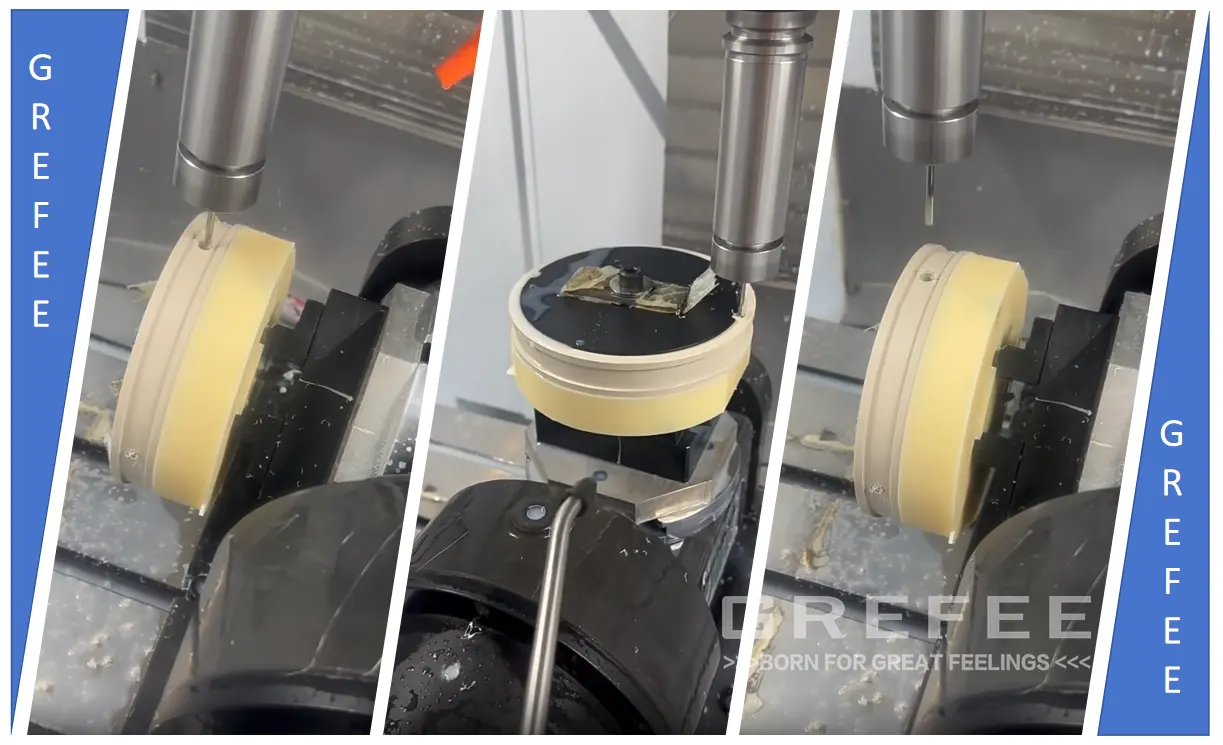
3D Printing:
PEEK 3D printing is a core method for high-end customization and production of complex structural parts. Relying on the characteristics of 3D printing, it makes up for the shortcomings of traditional processes such as injection molding and CNC in small-batch customization, special-shaped inner cavities and lightweight topology optimization structures, and has become a key manufacturing solution in high-end fields such as military industry, aerospace, medical treatment and robotics. GREFEE has been deeply engaged in the PEEK 3D printing field for more than 20 years, with more than 300 3D printing equipment, and has built a complete production line covering the two mainstream technical routes of FDM and SLS, forming a full-process capability from material research and development, printing forming to post-processing quality control, which can meet the stringent requirements of different fields for customized PEEK components.
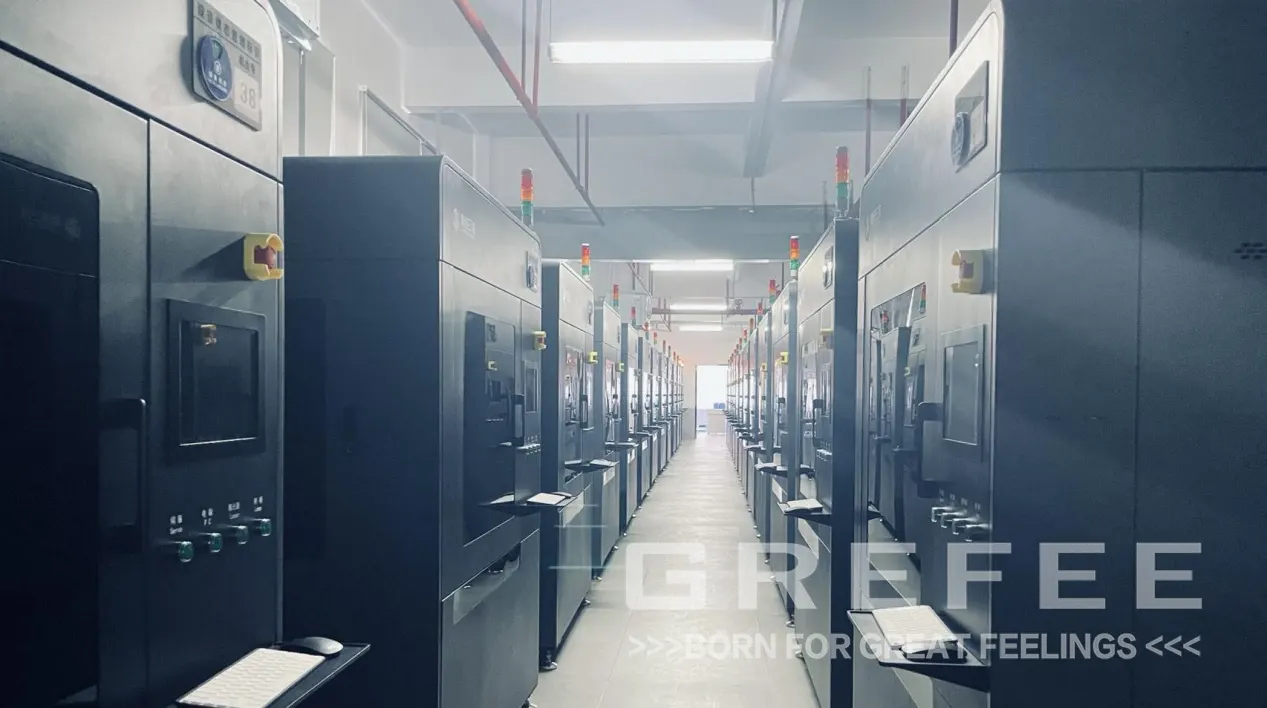
FDM Process:
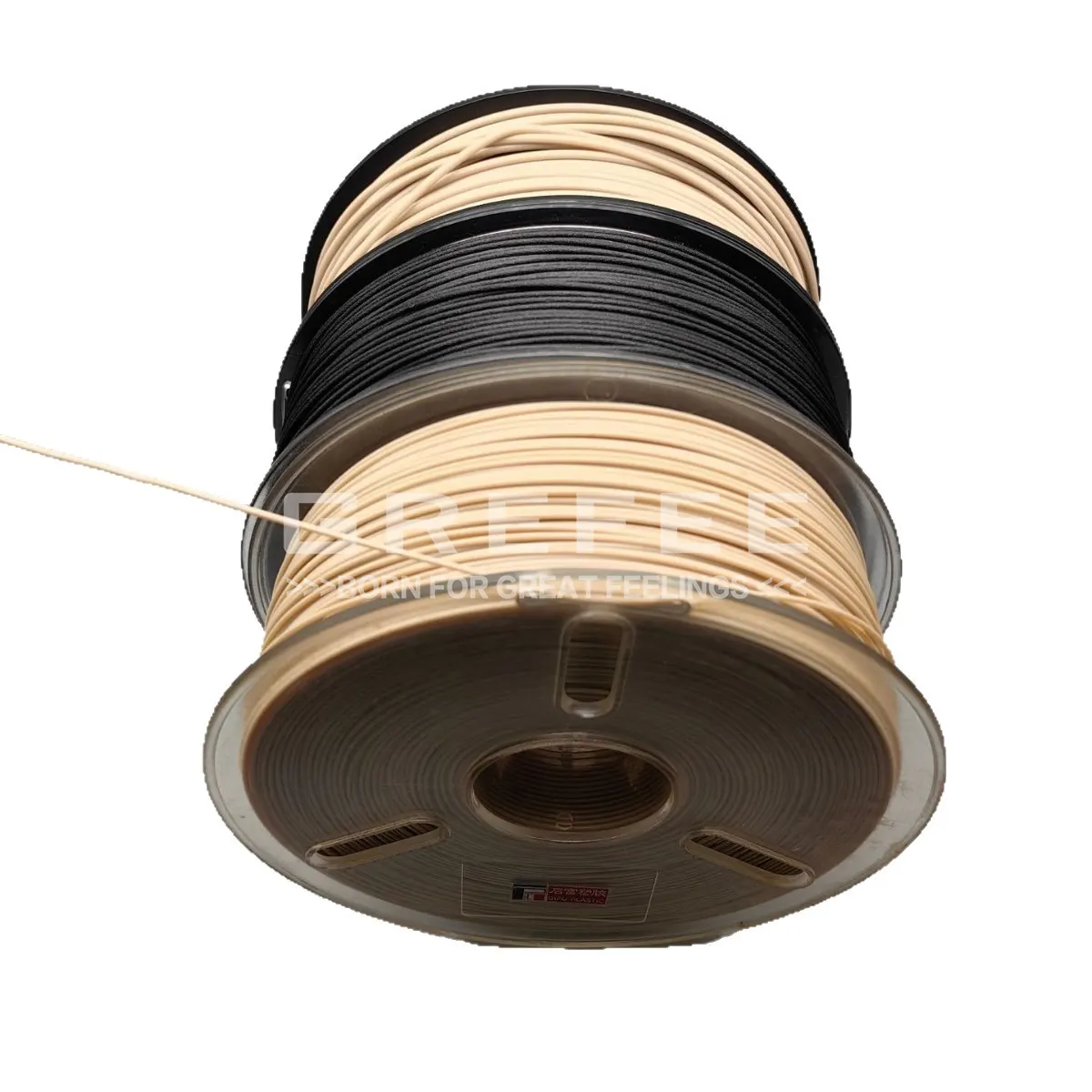
Aiming at the characteristics of high melting point and easy warpage of PEEK, GREFEE has carried out three core transformations on FDM equipment: first, adopt ceramic heat insulation nozzles and closed-loop temperature control system to achieve precise temperature control at 400-450°C and avoid material degradation; second, build a fully sealed forming cavity with continuous nitrogen purging to control the oxygen content below 500ppm and eliminate high-temperature oxidation; third, develop adaptive hot bed zonal temperature control technology to adjust the temperature of each zone in real time according to the component structure, greatly reducing the risk of warpage and deformation.
For printing filaments, GREFEE has independently developed a full range of PEEK printing filaments, including pure PEEK, 30% carbon fiber reinforced PEEK and medical grade sterile PEEK. The filament diameter tolerance is controlled within ±0.02mm, and the fluidity is 15% higher than that of similar industry products, which can be adapted to continuous fiber reinforced composite printing to further improve the mechanical properties of components.
SLS Process:
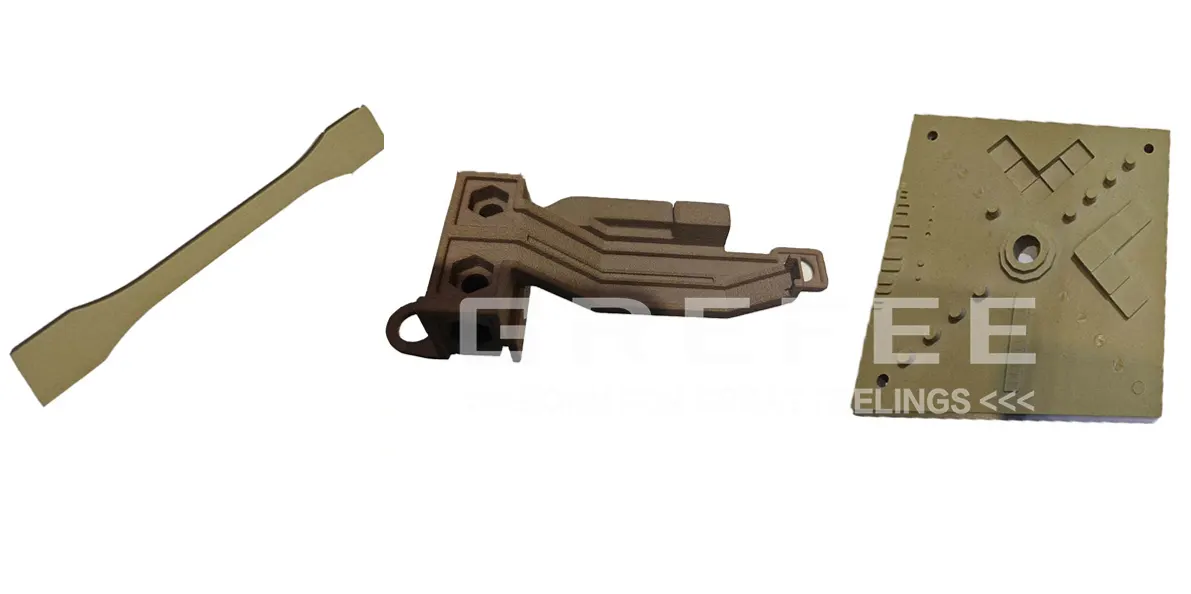
GREFEE’s SLS production line focuses on three core goals of high density, low shrinkage rate and high powder utilization rate, and adopts fiber laser printing equipment to achieve a printing precision of 0.05mm. Aiming at the problems of easy agglomeration of PEEK powder and difficult control of sintering shrinkage rate, GREFEE has developed a powder pretreatment process, built a powder recycling system, optimized the sintering parameter curve, and controlled the linear shrinkage rate of printed parts at 0.8%-1.2%, which is far lower than the industry average level. Through three links of high-temperature impurity removal, screening and classification, and performance testing, the material cost of mass production is greatly reduced, which has passed the mass production verification of military customers.
PEEK Gears:
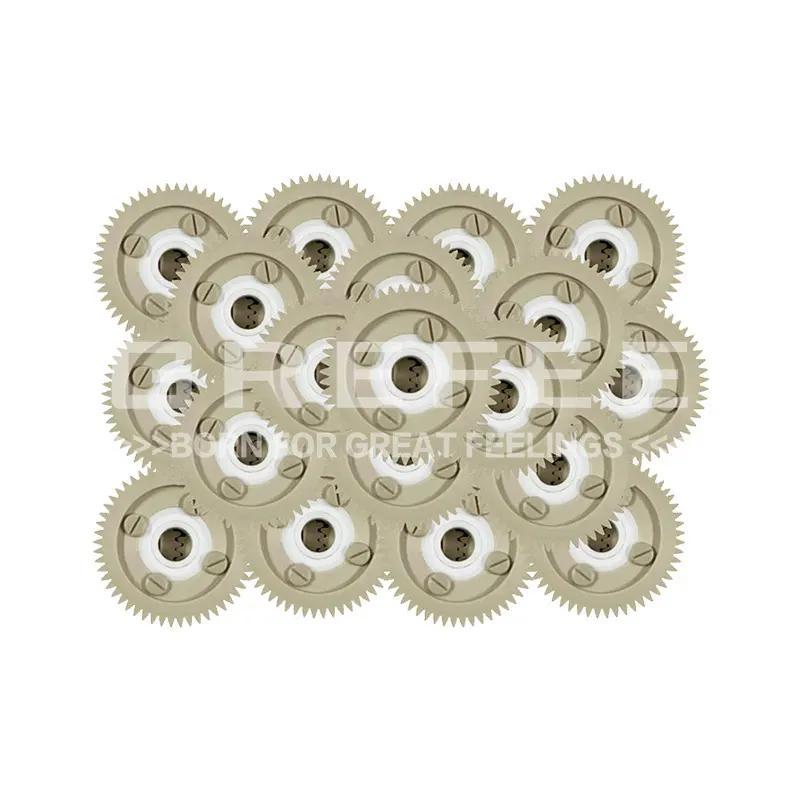
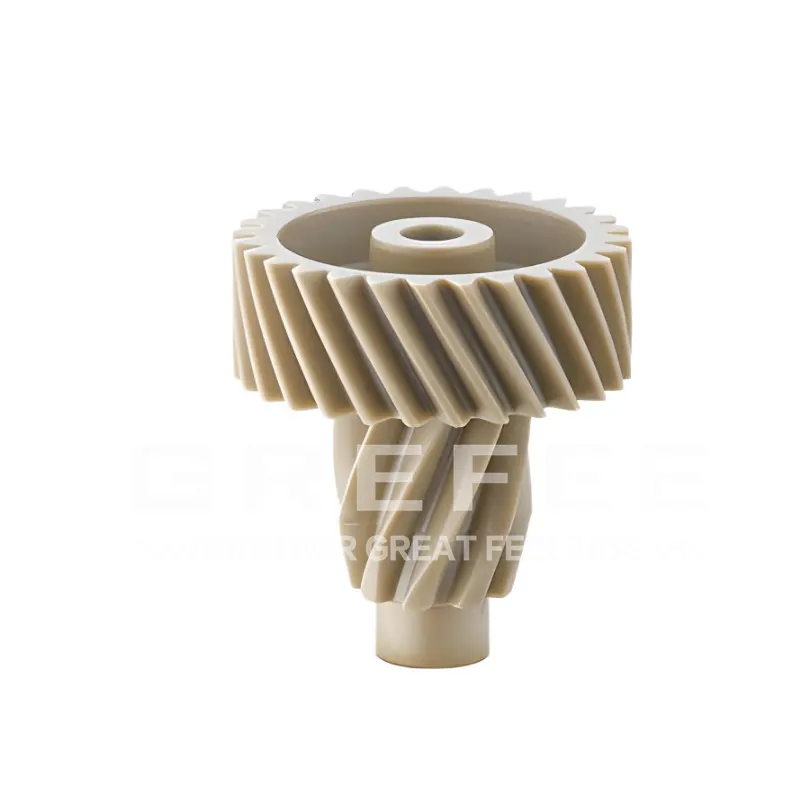
PEEK and its reinforced modified materials have gradually replaced traditional metal and ordinary engineering plastic gears in the precision transmission systems of automobiles and robots by virtue of their core advantages such as light weight, wear resistance, low noise, resistance to high and low temperatures and chemical stability, becoming key components to improve transmission efficiency, reduce energy consumption and noise.
GREFEE focuses on the research and development and production of PEEK gears, and has established a full-process technical system from material formulation to gear processing. For the automotive field, the developed wear-resistant special material for PEEK gears has a friction coefficient as low as 0.12 by adding PTFE and graphite, which is 20% lower than that of similar industry products and the service life is extended by 30%. It has been applied to auxiliary gears of new energy vehicle gearboxes and air conditioning compressor gears, and has been recognized by many automobile enterprises. In the robot field, the tolerance of PEEK harmonic reducer gears produced by GREFEE can be controlled within ±0.002mm, meeting the requirements of robot repeated positioning accuracy. At present, we have provided mass supporting for industrial robot enterprises.
Main Applications of Gears – Automobile
New energy vehicle electric drive system: Used for meshing gears and differential gears of drive motors and reducers, adapting to the high-speed and high-torque output requirements of motors, including gearbox auxiliary gears, oil pump gears, water pump gears, air conditioning compressor gears, and linkage gears of turbocharging systems.Automotive electronic auxiliary system: Precision micro gears such as electric power steering gears, electronic parking brake gears, window lifter gears and seat adjustment gears.
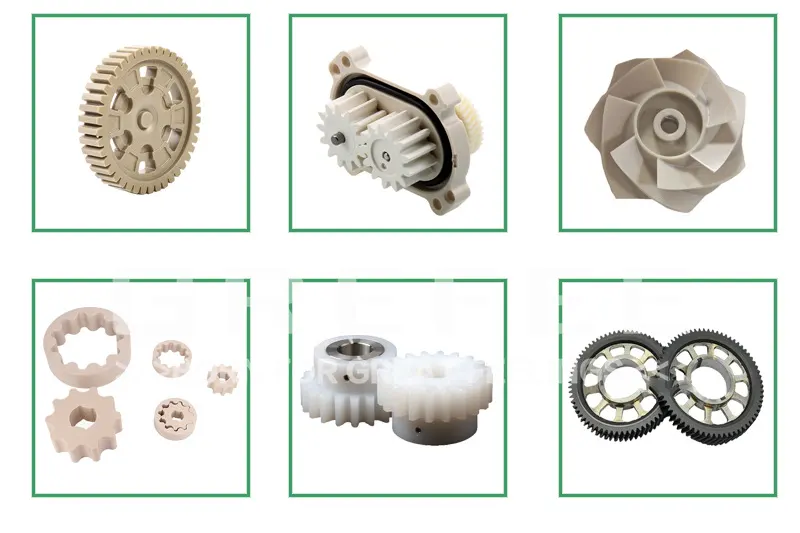
The advantages of PEEK gears replacing metal gears in automobiles are reflected in the following aspects:
Light weight: PEEK has a low density, reducing the weight by more than 60% compared with metal gears of the same specification and more than 30% compared with aluminum alloy gears, which can reduce the overall energy consumption of the vehicle. Especially for new energy vehicles, data analysis shows that for every 10kg weight reduction of new energy vehicles, the cruising range is increased by about 2-3km.
Low noise: The elasticity of PEEK material is lower than that of metal, with small impact and vibration during meshing, and the gear operation noise can be reduced by 3-8dB. The use of PEEK gears can directly improve driving quietness and thus reduce the cost of noise reduction materials.
Resistance to harsh environments: It can withstand high temperatures of 120-180°C in the engine compartment, resist corrosion of chemical media such as engine oil, gearbox oil and coolant, and its service life is 2-3 times longer than that of gears made of PA materials.
Low lubrication demand: Wear-resistant PEEK gears made by adding PTFE and graphite to PEEK have a friction coefficient reduced to 0.15, and can work stably under non-lubricated conditions, effectively reducing maintenance costs.
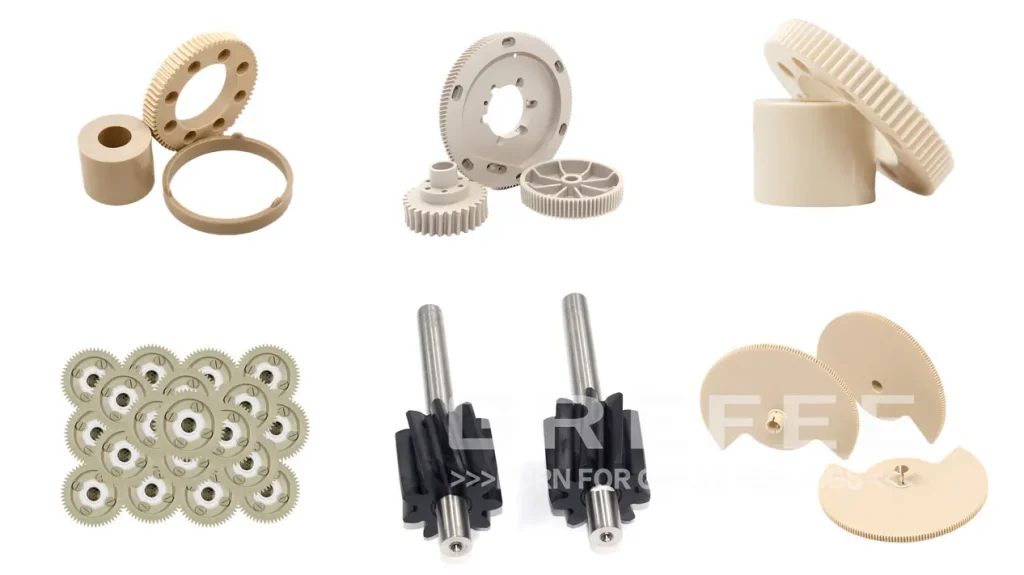
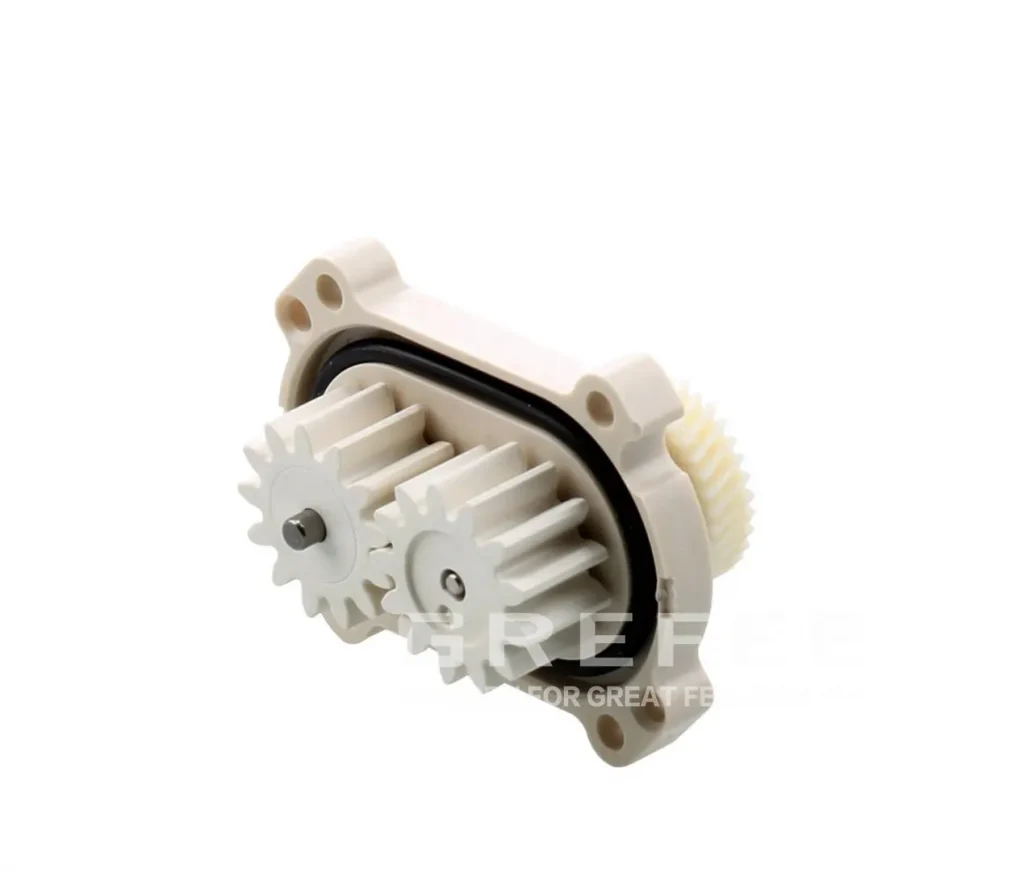
Aiming at the high requirements of the new energy vehicle electric drive system, GREFEE uses carbon fiber reinforced PEEK materials for the meshing gears supporting drive motors and reducers, which effectively improves the mechanical strength, can withstand high torque output, and maintains stable performance during long-term work at 180°C. For the precision micro gears of the automotive electronic auxiliary system, the micro-injection process is adopted with a minimum module of 0.15 and a tooth profile accuracy of above ISO Grade 5, which has been mass supplied to leading new energy vehicle enterprises, helping them improve the efficiency of the electric drive system and the cruising range of the whole vehicle.
Main Applications of Gears – Robot
PEEK gears have extremely high requirements for precision, high load resistance, low wear and long-term stability in the joint transmission systems of robots, especially industrial robots and humanoid robots. When combined with metals, PEEK gears can achieve good stability and quietness, especially in the core transmission components of robots.
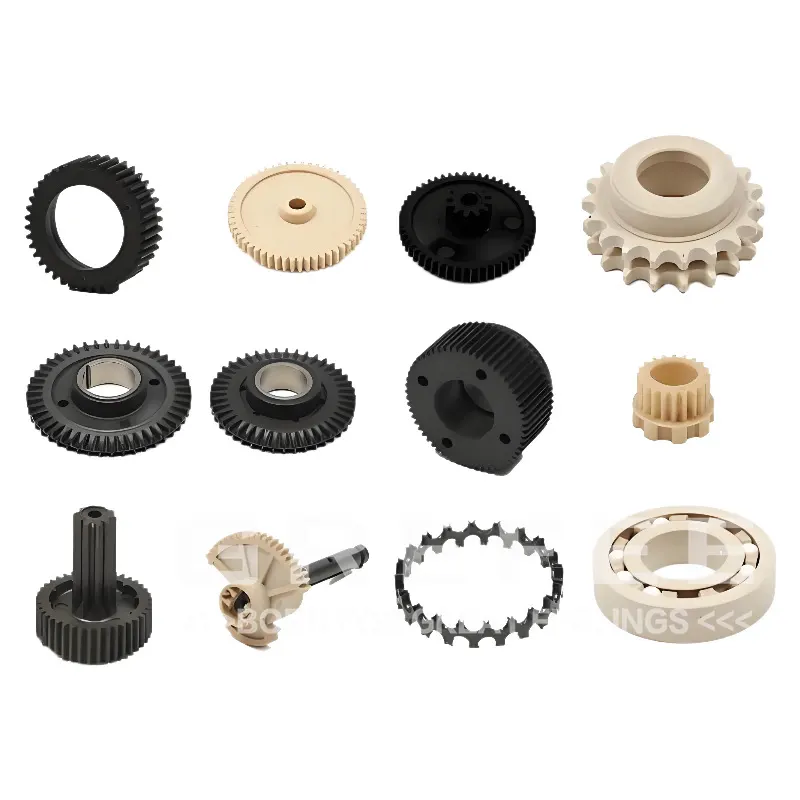
Robot joint reducers: Auxiliary gears and output gears of harmonic reducers and RV reducers, adapting to the requirements of robot repeated positioning accuracy.
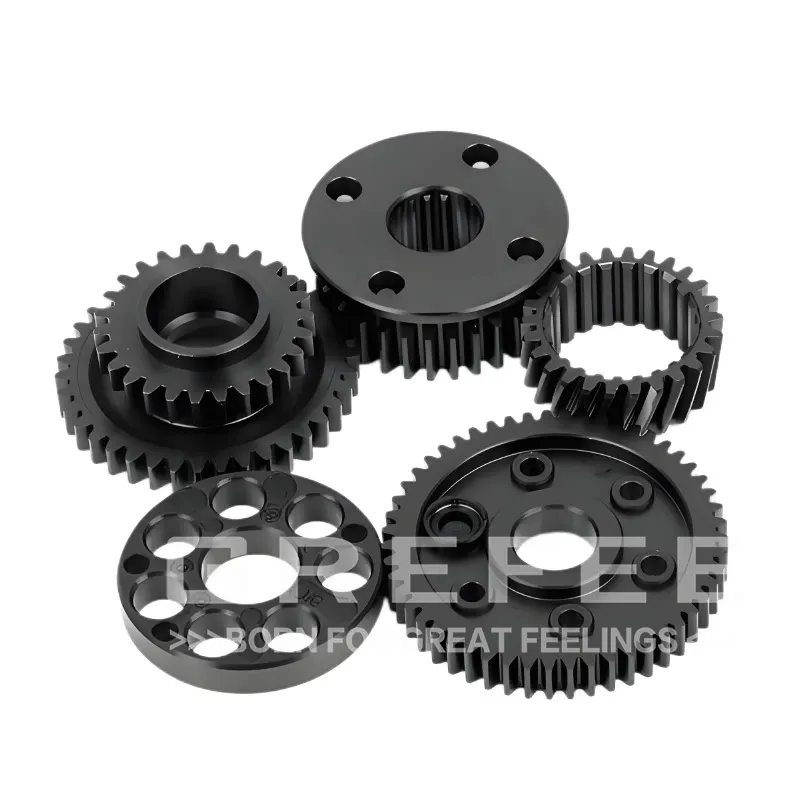
Robot transmission gears: Torque transmission gears and power distribution gears at joints, which need to meet light weight requirements to reduce joint inertia and achieve low noise.
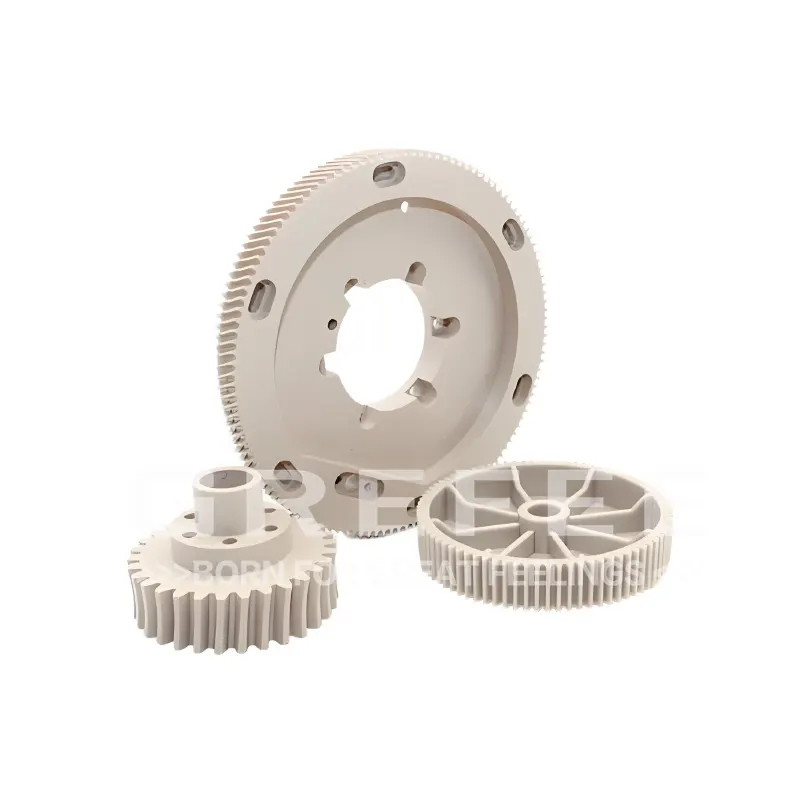
Special robots: AGV robot drive wheel gears, medical robot precision transmission gears, underwater robot waterproof gears, etc.
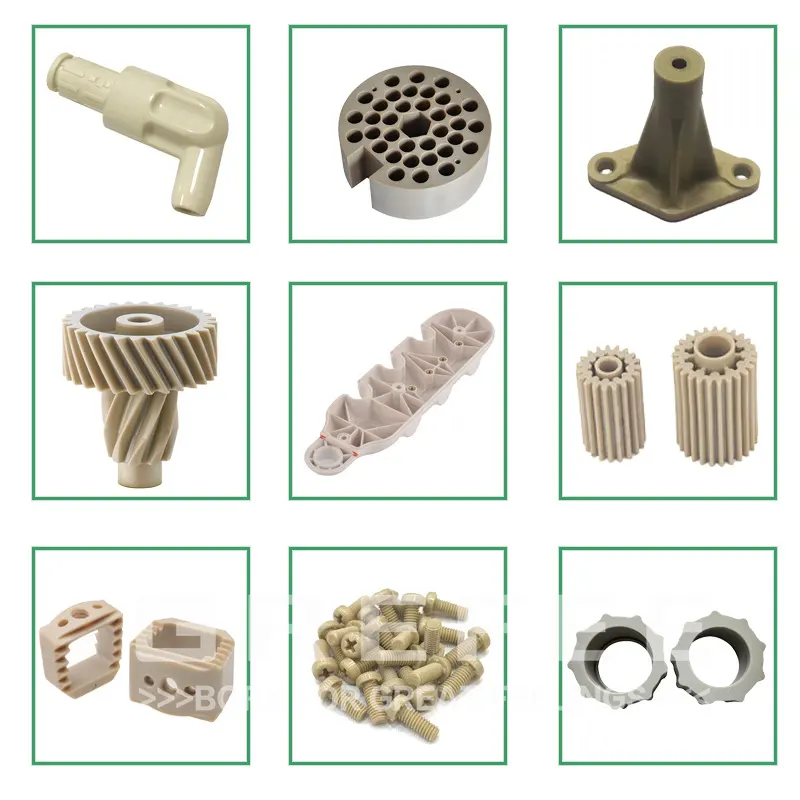
The advantages of PEEK gears in robot applications are as follows:
Precision transmission: PEEK has a low molding shrinkage rate, and high-precision tooth profiles can be achieved through injection molding + CNC finishing with a gear tolerance of ±0.005mm, ensuring robot motion accuracy.
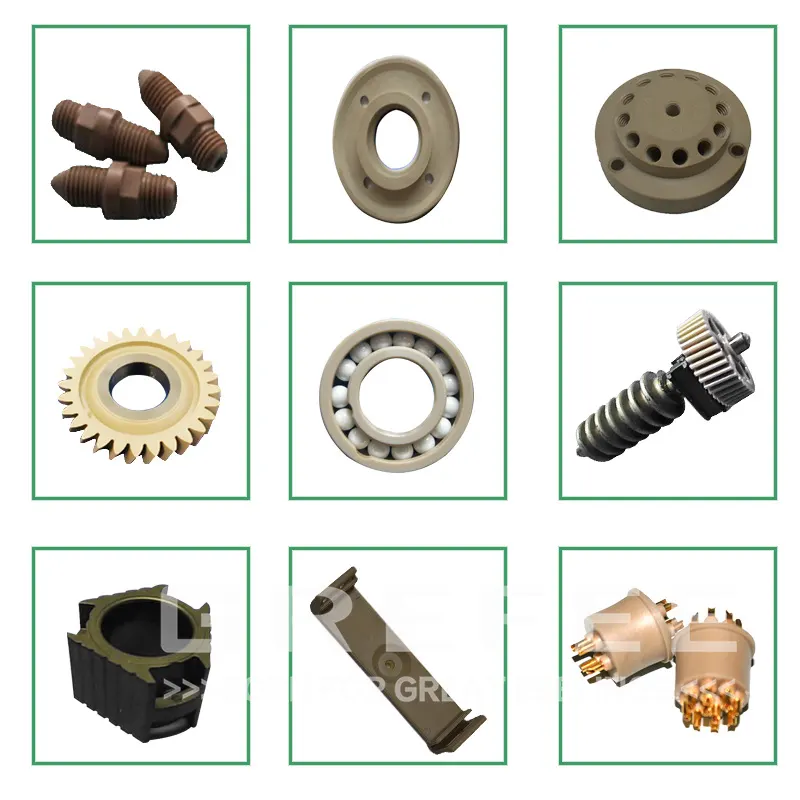
High load resistance: Carbon fiber reinforced PEEK gears have high flexural strength and good impact resistance, and can withstand alternating loads caused by frequent start and stop of robot joints.
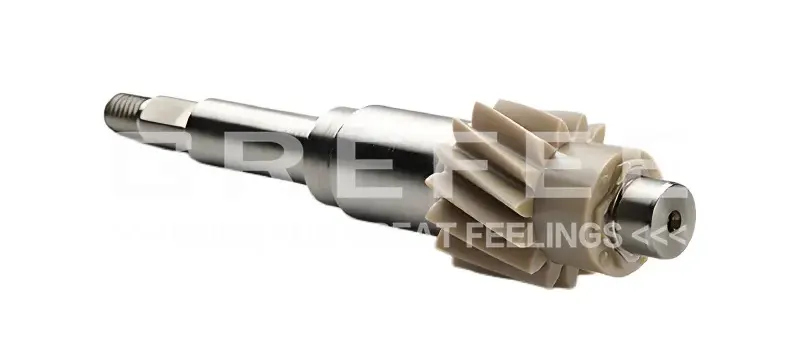
Anti-seizure: PEEK has excellent self-lubricating properties. Even in scenarios with dust and slight foreign body intrusion, it can avoid the common seizure and occlusal wear problems of metal gears. Combined with metal shafts, it can not only ensure the connection performance of components but also improve the reliability of robots.
Aiming at the stringent requirements of the robot joint transmission system, GREFEE has launched a customized PEEK gear solution. The auxiliary gear developed for the harmonic reducer of industrial robots adopts high-strength carbon fiber reinforced PEEK material, and the tooth profile tolerance is controlled within ±0.002mm after CNC finishing, meeting the robot repeated positioning accuracy requirement of ±0.005mm. For medical robots, biocompatible PEEK transmission gears have been developed, which have passed the ISO 10993 biocompatibility certification and can be used for robot joint components in contact with the human body. In addition, the waterproof PEEK gear developed for underwater robots can work stably for a long time in a water depth of 100 meters through special sealing structure design and material modification, with a waterproof performance of IP68 grade.
Military Industry:
In the military industry, PEEK has become a key material for manufacturing high-end military equipment by virtue of its characteristics such as high temperature resistance, radiation resistance, high strength and light weight, with main application scenarios including aerospace components, weapon equipment components and military electronic equipment.
GREFEE has a complete technical reserve and production capacity in the application field of military PEEK materials, and has passed the military quality management system AS9100D certification; GREFEE has become the most reliable partner in the supply chain of the global aerospace manufacturing field.
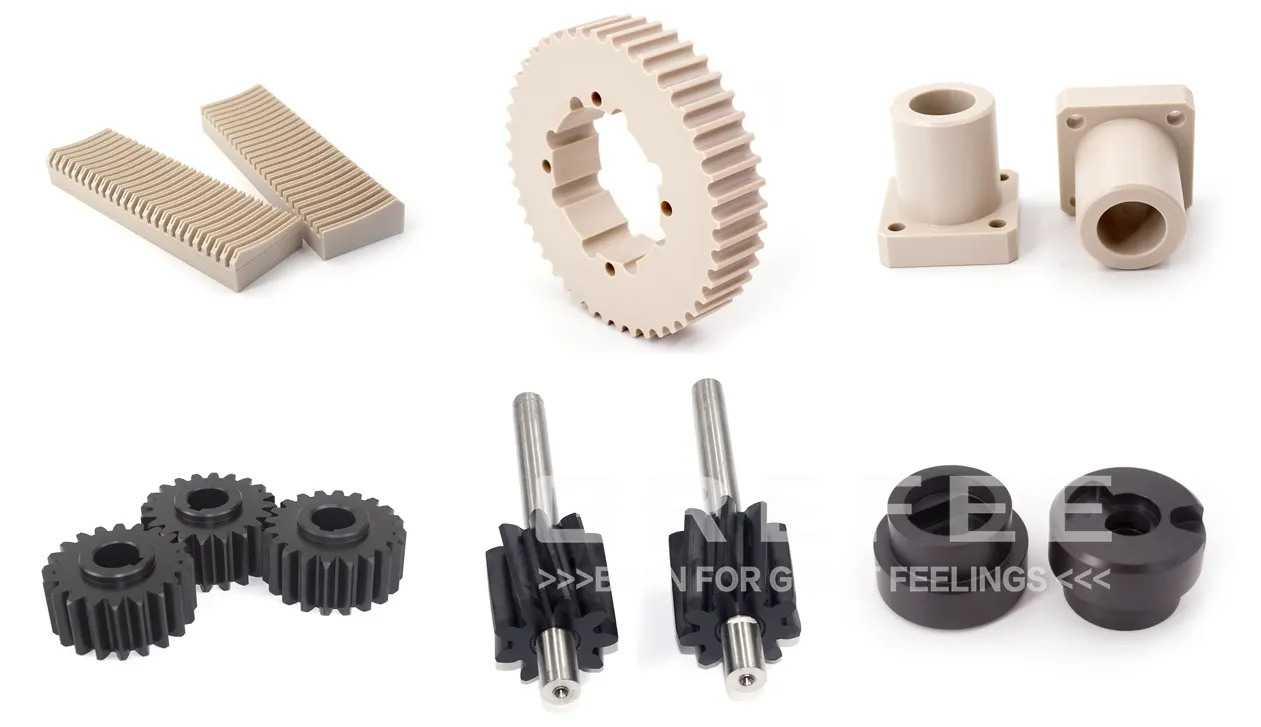
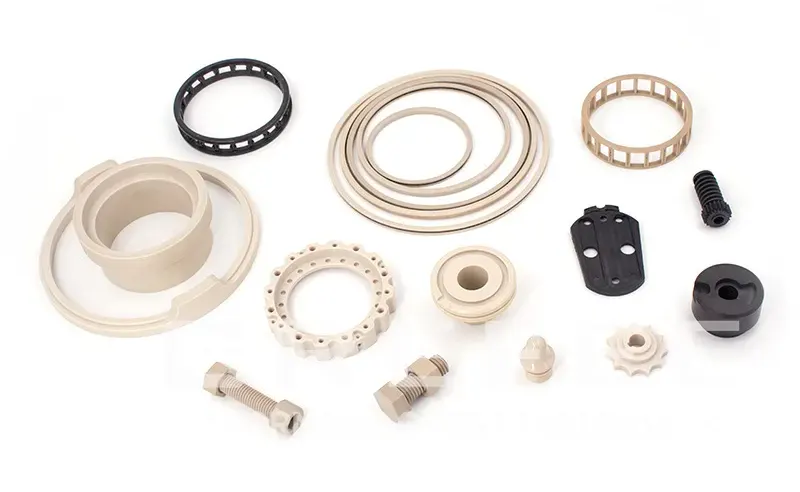
Aerospace components: Used to manufacture aircraft engine bushings, turbine blade sealing rings, fuel system components, etc. PEEK components can withstand high-temperature and high-pressure working environments, while reducing the weight of the engine and improving the thrust-weight ratio of the aircraft. In spacecraft, PEEK can be used to manufacture the structural frame of satellites, and its radiation resistance can ensure the long-term stable operation of components in space.
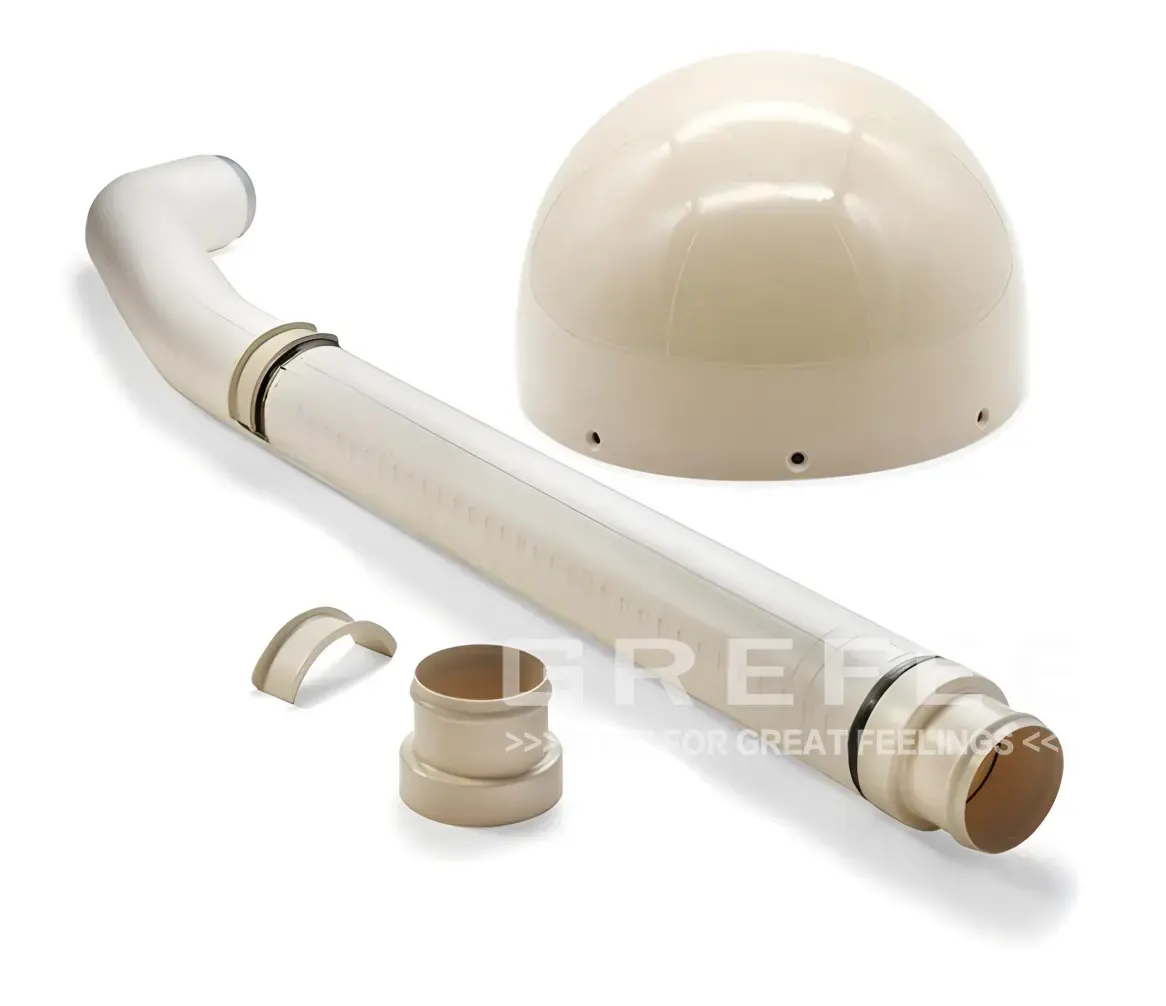
Weapon equipment components: PEEK can be applied to most equipment components in weapon equipment to replace traditional metal materials, reduce the overall weight of equipment and improve portability.
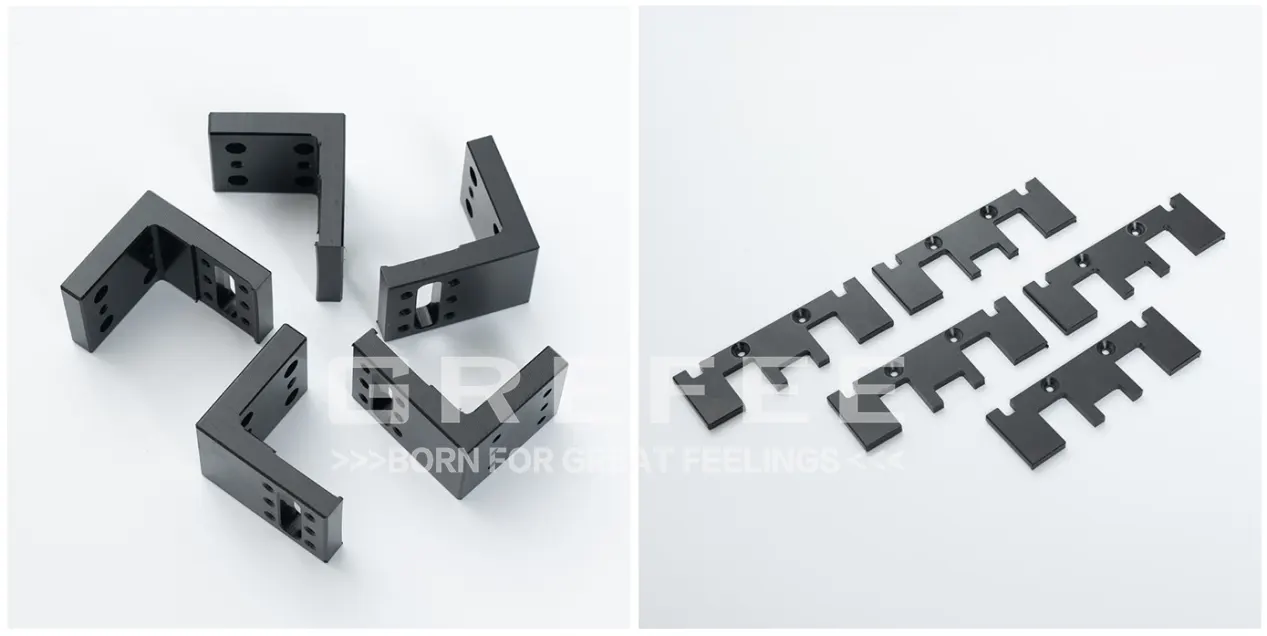
Military electronic equipment: Used to manufacture high-frequency connectors, insulation brackets, circuit board substrates, etc. in military radar, communication equipment and navigation systems. The excellent electrical insulation performance and environmental stability of PEEK can ensure the normal operation of electronic equipment in complex battlefield environments such as high temperature, high humidity, vibration and electromagnetic interference, improving the combat effectiveness of equipment.
Medical Field:The biocompatibility, sterilization resistance and processability of PEEK have led to the continuous expansion of its applications in the medical field, covering orthopedics, dentistry, surgical instruments, medical equipment and other directions.
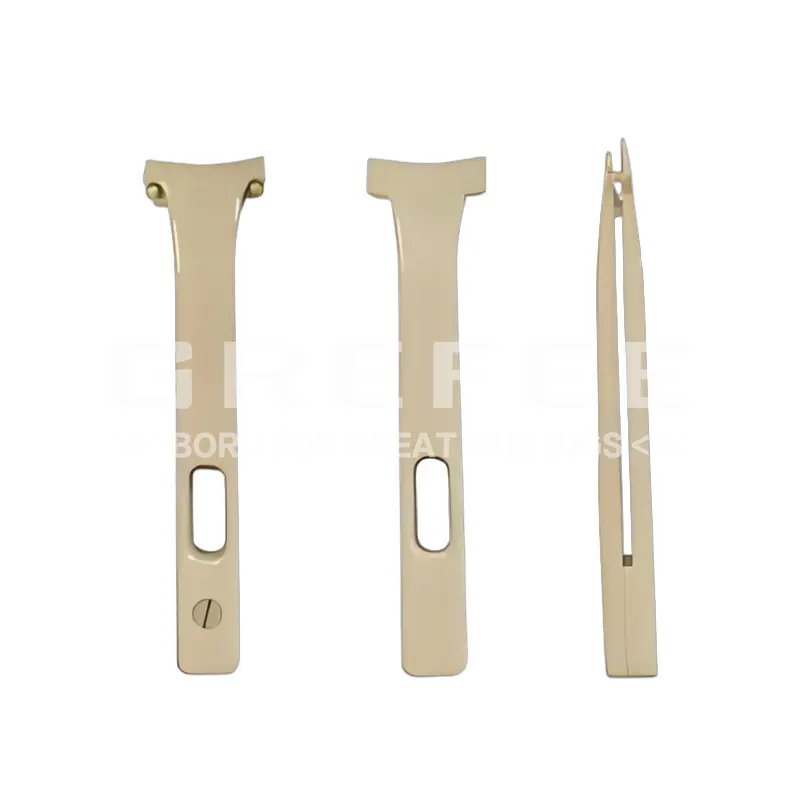
Orthopedic implants: It is one of the main applications of PEEK in the medical field, which can be used to manufacture artificial hip joints, knee joints, spinal fusion devices, bone fixation plates, etc. Compared with traditional metal implants such as titanium alloy, PEEK has an elastic modulus closer to that of human bones, reducing the risk of bone resorption around the implant. At the same time, PEEK has good X-ray permeability, which is convenient for observing bone healing through imaging examination after surgery. For example, spinal fusion devices made of PEEK material can achieve good fusion with vertebral bodies, and there is no metal artifact interference when patients undergo CT and MRI examinations after surgery.
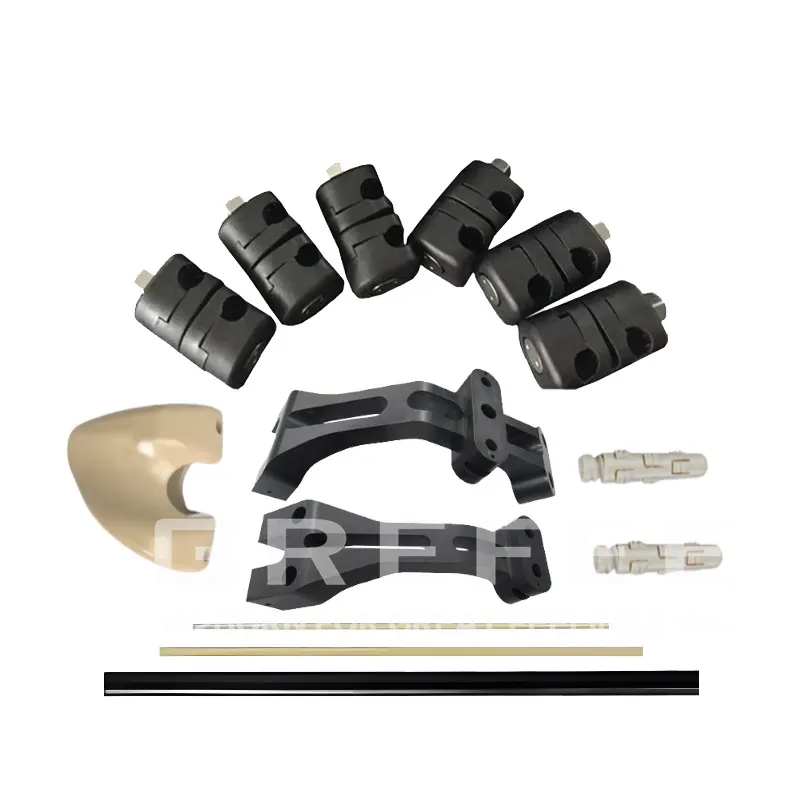
Dental restorations: Used to manufacture dental implant abutments, crowns, bridges, etc. PEEK has good aesthetic performance and can be matched with the color of natural teeth through dyeing treatment. The wear resistance and corrosion resistance of PEEK ensure the long-term use of dental restorations in the complex oral environment, and its biocompatibility can avoid irritation to gingival tissue and reduce inflammatory reactions.
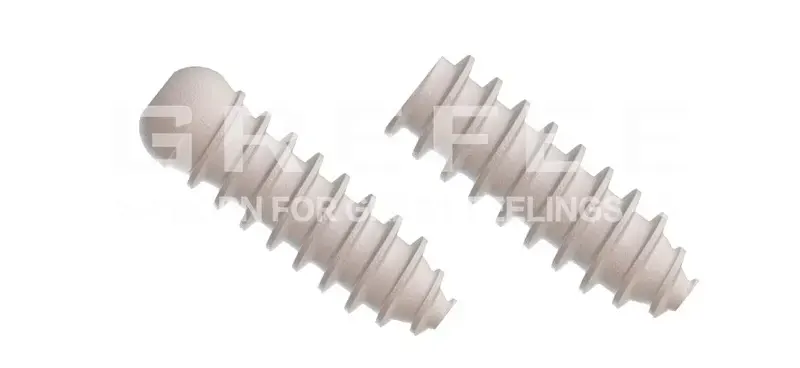
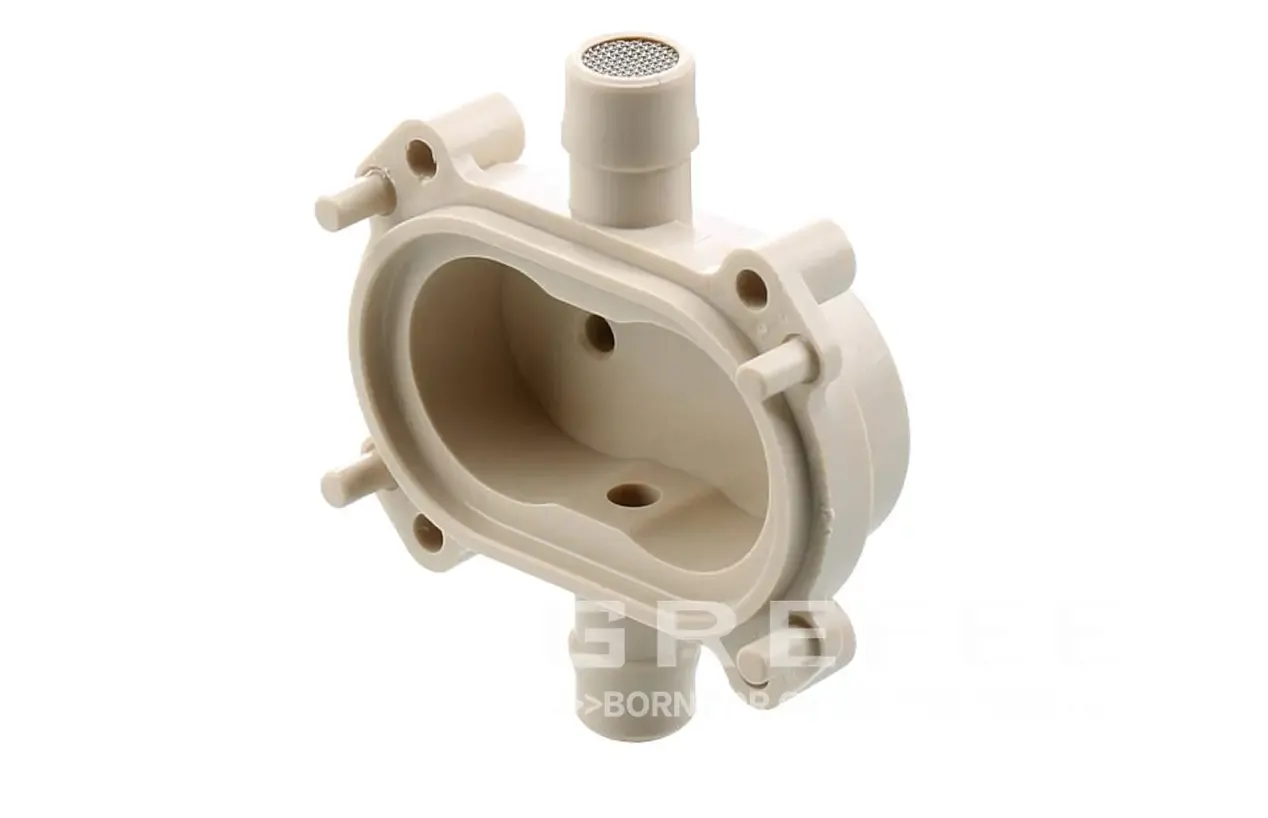
Surgical instruments and medical equipment: PEEK can be used to manufacture handles, jaws, joints and other components of surgical instruments. In terms of medical equipment, PEEK is used to manufacture pipelines of hemodialysis machines, valve cores of infusion pumps, probe housings of ultrasonic diagnostic equipment, etc. Its chemical corrosion resistance can ensure that the equipment does not produce harmful substances when in contact with medicinal liquids and blood, ensuring medical safety.
GREFEE has been deeply engaged in the medical PEEK field for many years and has long passed the medical system ISO 13485 certification. In addition to building a Class 100,000 clean room to ensure that the production environment meets the standards, we have formed core technical advantages in the field of orthopedic implants and dental restorations for special parts. In terms of medical equipment components, the PEEK medical equipment accessories produced by GREFEE have provided supporting for many world-renowned medical equipment enterprises such as Mindray, Johnson & Johnson, GE Healthcare and Stryker.
Electrical Field:In the electrical field, the excellent electrical insulation performance, high temperature resistance and environmental stability of PEEK make it an ideal material for manufacturing high-end electrical products, with main applications including the following aspects
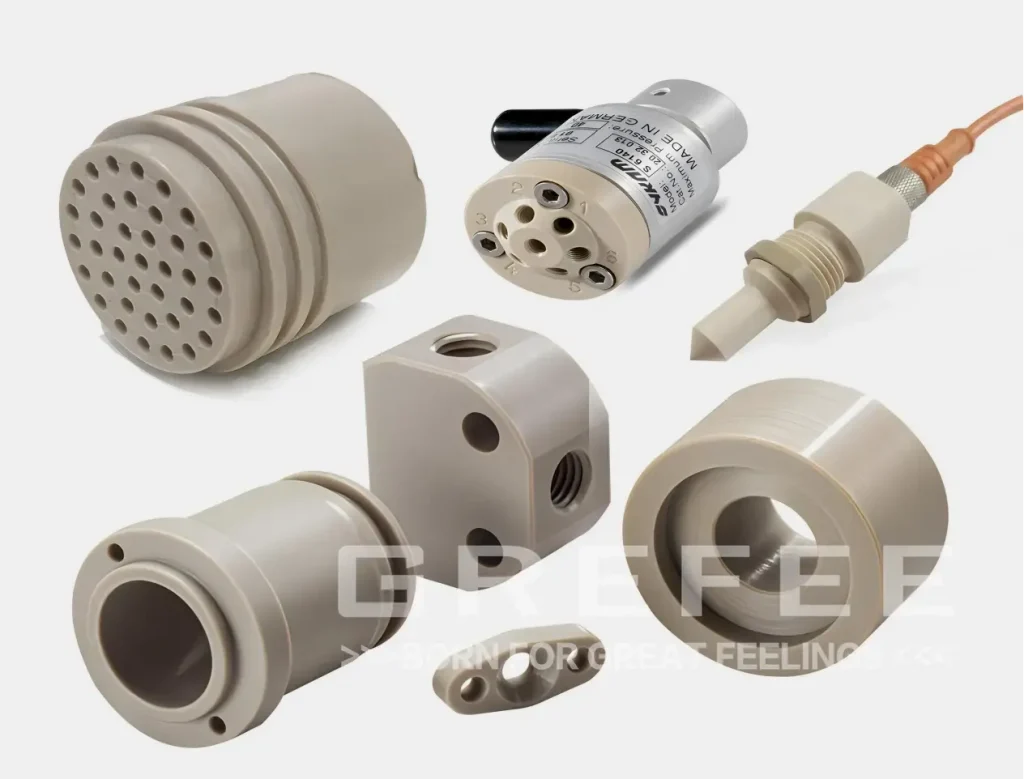
Electronic connectors and connectors: Used to manufacture high-frequency connectors, micro connectors, etc. in aerospace, automotive electronics, industrial control and other fields. PEEK can maintain stable electrical properties in high-temperature (e.g., 150-200°C in the automobile engine compartment) and high-frequency environments, and its mechanical strength can ensure that the connector is not easy to damage during plugging and unplugging, improving the reliability of connection. For example, in the high-voltage electrical system of new energy vehicles, PEEK connectors can withstand the working conditions of high voltage and large current, and at the same time resist vibration and impact during vehicle driving.
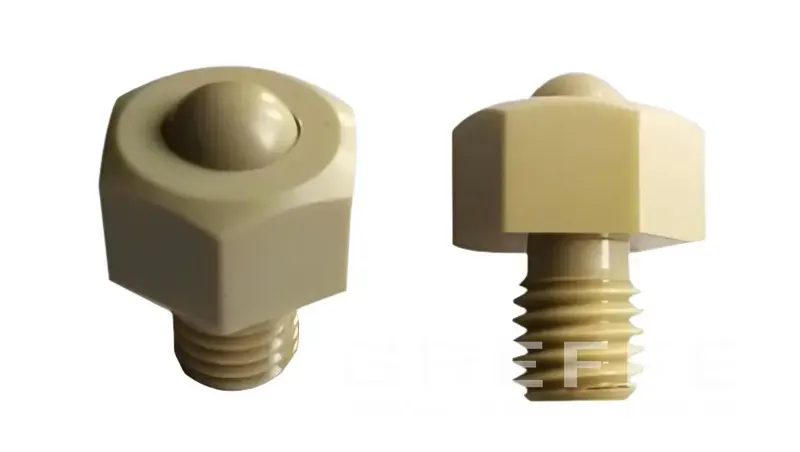
Electrical insulation components: Used to manufacture insulation slot wedges, insulation paper of motors, insulation skeletons of transformers, cable insulation layers, etc. PEEK has an arc resistance of more than 120s and excellent corona resistance, which can effectively prevent insulation breakdown of electrical equipment during operation and improve the insulation grade and service life of equipment. For example, in high-voltage motors, PEEK insulation slot wedges can replace traditional mica products, which not only have better insulation performance but also reduce the volume and weight of the motor.
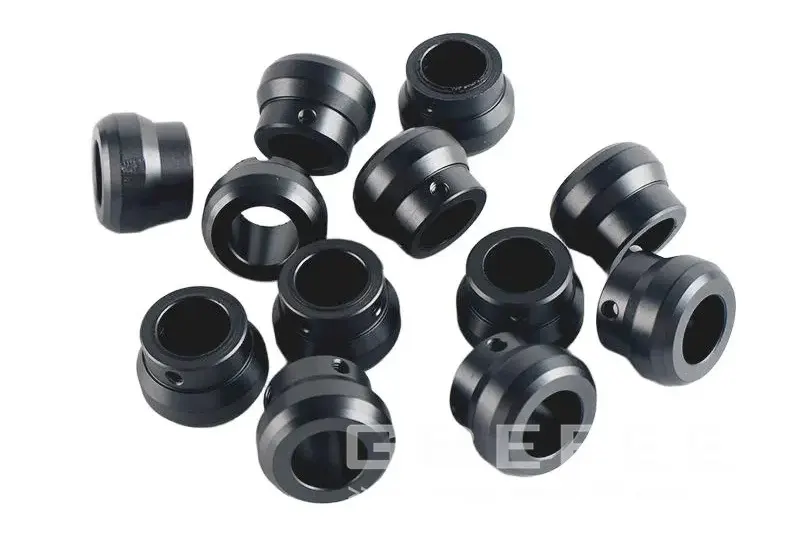
PCB substrates: PEEK can be used as a substrate for high-performance PCBs, especially for PCBs with high-frequency and high-speed signal transmission such as 5G communication equipment and radar system PCBs. Compared with traditional substrates, PEEK substrates have a lower dielectric constant and smaller dielectric loss, which can effectively reduce signal attenuation and interference during transmission and improve the signal transmission rate and stability of communication equipment. In addition, the high temperature resistance of PEEK substrates can meet the high-temperature requirements during PCB welding.
GREFEE has strong technical research and development and production capacity in the application of PEEK in the electrical field. For electronic connectors, the developed high-frequency PEEK connector material meets the high-frequency signal transmission requirements of 5G communication equipment and has mass supplied PEEK connector housings to Huawei, a leading communication equipment enterprise. In terms of electrical insulation components, the PEEK motor insulation slot wedges produced by GREFEE have been applied to the manufacturing of high-voltage motors, helping motor enterprises improve product power density.
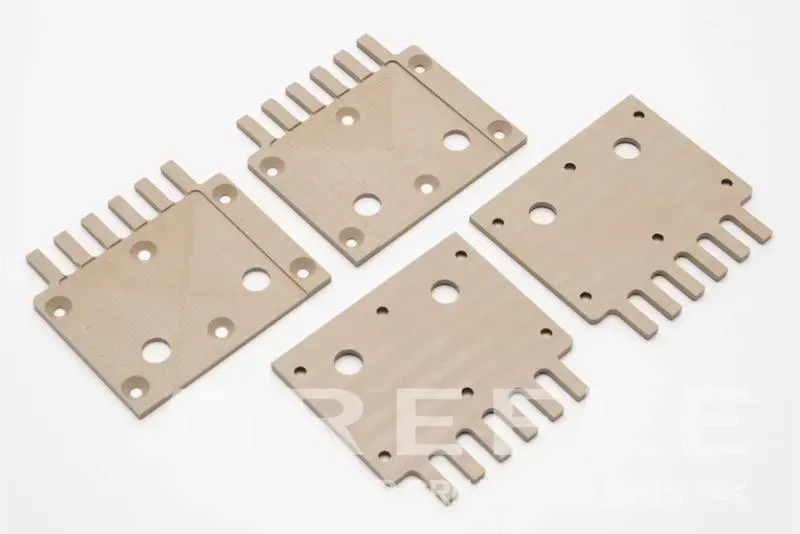
PEEK Material Full-Process Quality Control and Material Support System
GREFEE has always regarded material quality and product quality as core competitiveness. Around the whole life cycle of PEEK materials from raw material incoming to finished product delivery, we have established a full-process quality control system with four core links: incoming material inspection, composition inspection, in-process inspection and delivery inspection. Combined with professional testing equipment and standardized testing processes, we realize all-dimensional and high-precision control of PEEK product quality, ensuring that all PEEK products meet the stringent standards of military industry, medical treatment, aerospace, automobile, electrical and other fields and the customized requirements of customers.
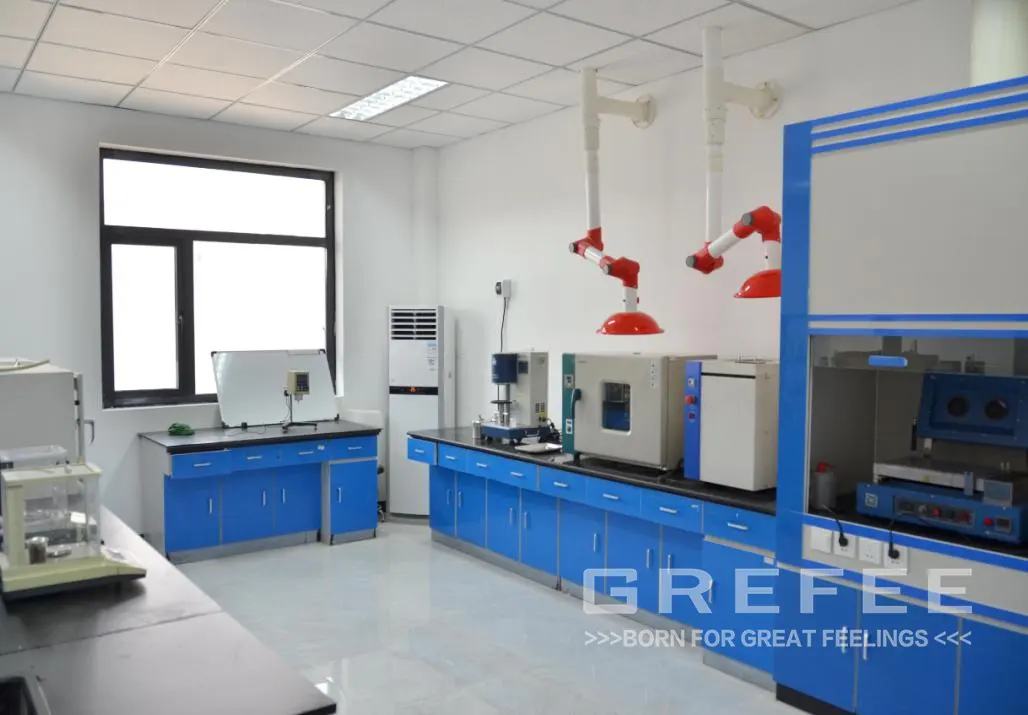
Incoming material inspection: GREFEE conducts 100% full-item incoming material inspection on all incoming PEEK raw materials, including pure PEEK resin, filling materials, PEEK printing filaments and powders, eliminating unqualified raw materials from entering the production process and ensuring the foundation of product quality from the source.
Composition inspection: Aiming at the core indicators of PEEK materials such as molecular structure, composition ratio and purity, GREFEE is equipped with high-precision testing equipment such as high-performance liquid chromatography, infrared spectrometer, thermogravimetric analyzer and elemental analyzer. A professional material testing team carries out composition inspection to ensure that the material composition and performance meet the design requirements and the performance of materials in the same batch is highly consistent.
In-process inspection: The processing of PEEK is greatly affected by temperature, pressure, process parameters and other factors. GREFEE has established a process-based and full-process in-process inspection system for different processing technologies such as injection molding, CNC precision machining, 3D printing and gear machining, realizing real-time monitoring and timely correction of the processing process to avoid product quality problems caused by deviations in process parameters.
Delivery inspection: All PEEK finished products must pass full-item and high-precision delivery inspection before leaving the factory, which is independently completed by the quality control department. Only after passing the inspection and issuing a finished product inspection report can the delivery be arranged, ensuring that every product delivered to customers is qualified.
Through the full-process and multi-dimensional material and quality control system, GREFEE integrates quality control requirements into every link of PEEK product production. Relying on professional testing equipment, standardized testing processes and strict quality control standards, we realize precise control and full life cycle traceability of PEEK product quality, ensuring that all PEEK products can meet the stringent use requirements of various high-end fields and providing customers with high-quality and high-reliability PEEK products and solutions.
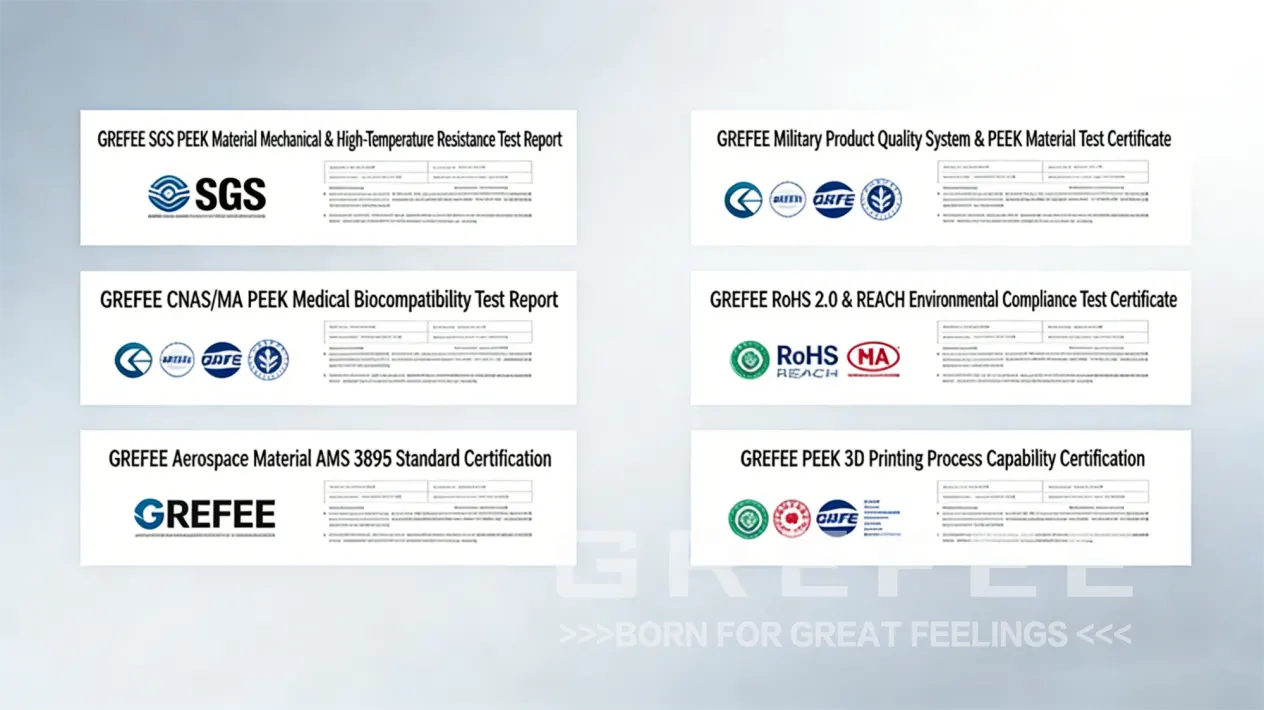
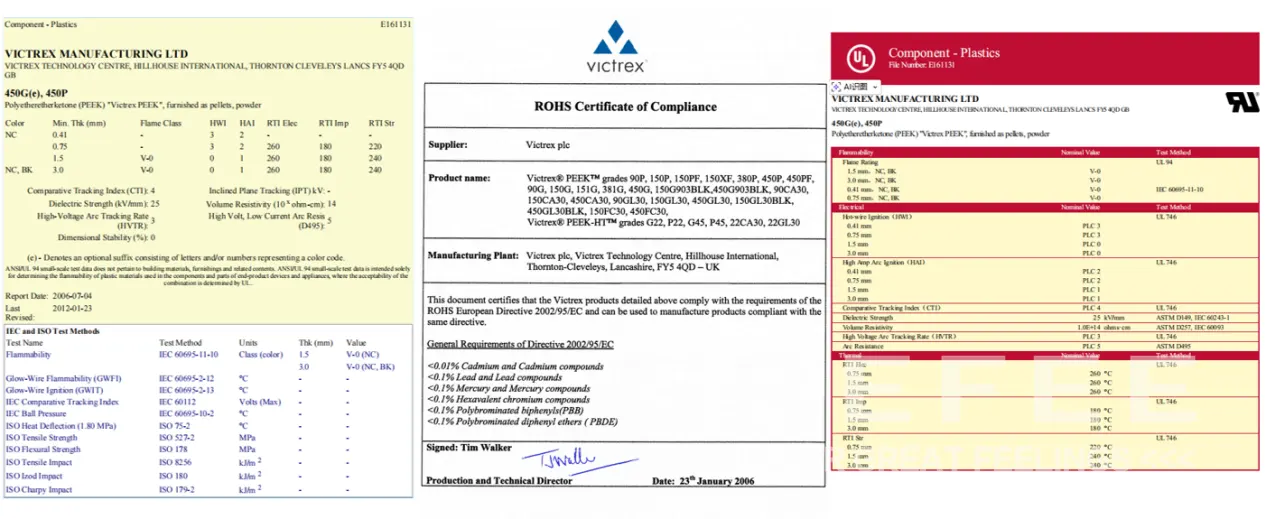
GREFEE can provide comprehensive certificates such as material property sheets, MSDS, ROHS, UL for all raw materials, and four major reports from raw materials to delivery, namely incoming material inspection report, composition inspection report, production process inspection report and full delivery inspection report.
Future Development of PEEK and GREFEE’s Layout Plan
As a special engineering plastic with excellent performance, PEEK has been widely and crucially applied in many high-end fields such as military industry, medical treatment and electrical engineering by virtue of its outstanding advantages in high temperature resistance, mechanical strength, biocompatibility, electrical insulation and other aspects, becoming an important material support for promoting technological upgrading and product innovation in related industries. With the continuous progress of science and technology, the requirements for material performance are becoming increasingly stringent. The research and development of PEEK materials will move towards the direction of higher performance, multi-functionality, low cost and green environmental protection production.
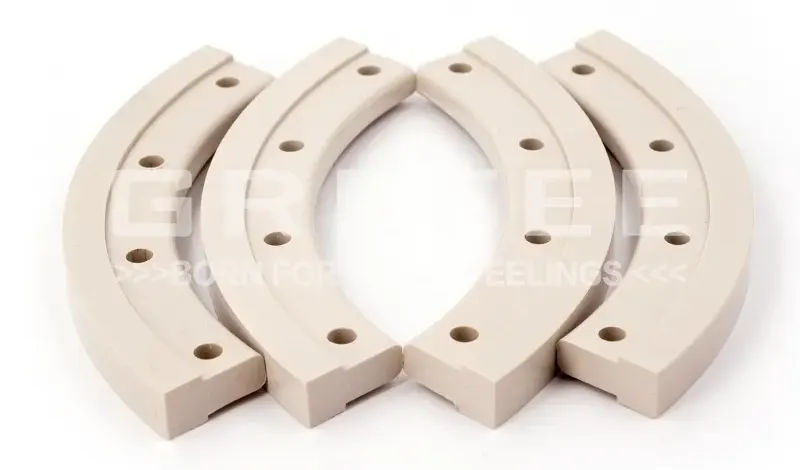
As a professional enterprise in the application field of PEEK materials, GREFEE has formed a complete product solution and technical service capacity in major fields such as gears, military industry, aerospace, medical treatment and electrical engineering, providing customers with high-quality PEEK products and customized solutions.
In the future, GREFEE will continue to increase investment in high-precision equipment, further expand the application of PEEK materials in emerging fields such as new energy, aerospace and biomedicine, improve quality and market competitiveness, promote the sustainable development of PEEK, and inject stronger impetus into the development of high-end manufacturing.
MORE BOLG
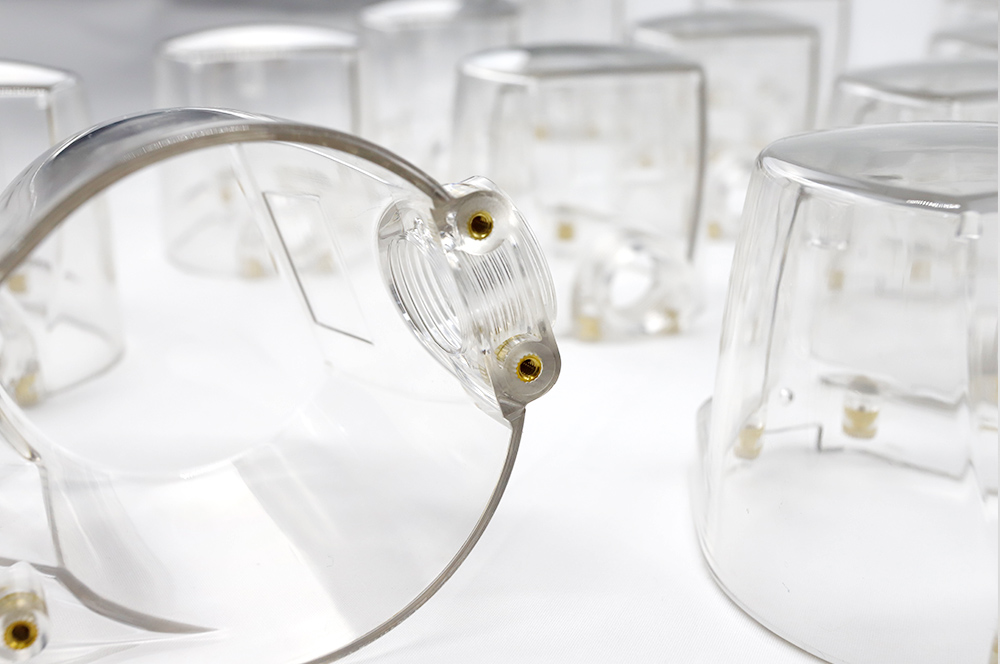
Insert mold in injection mold service
What are advantages and disadvantages of Zinc alloy and Aluminum alloy?
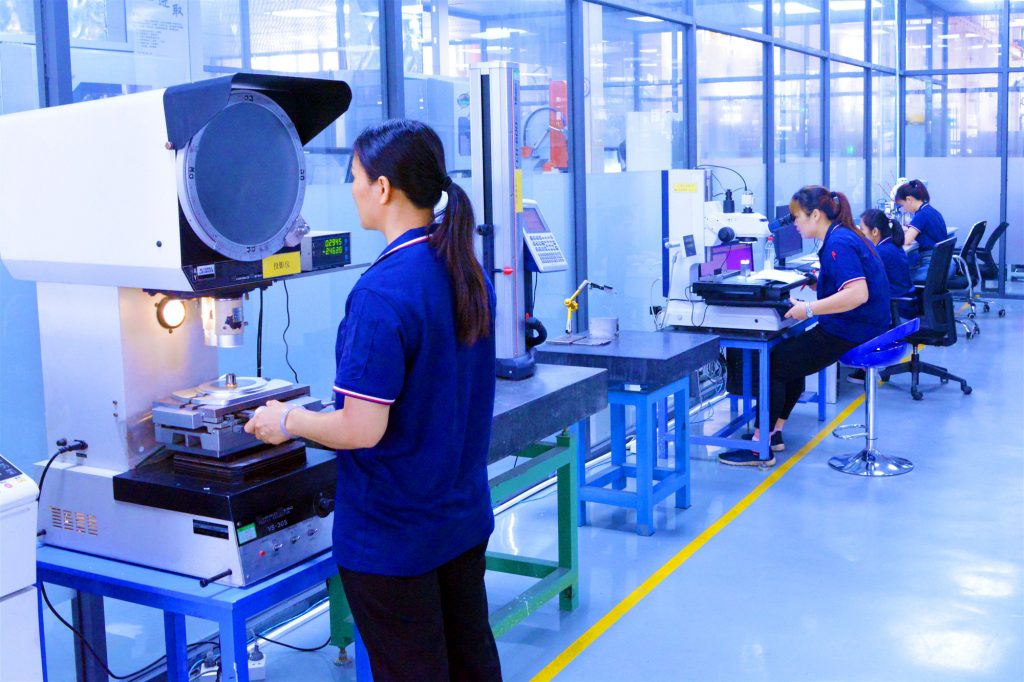
Inspection standards for injection molded partappearance
How to judge the quality of your plastic products?
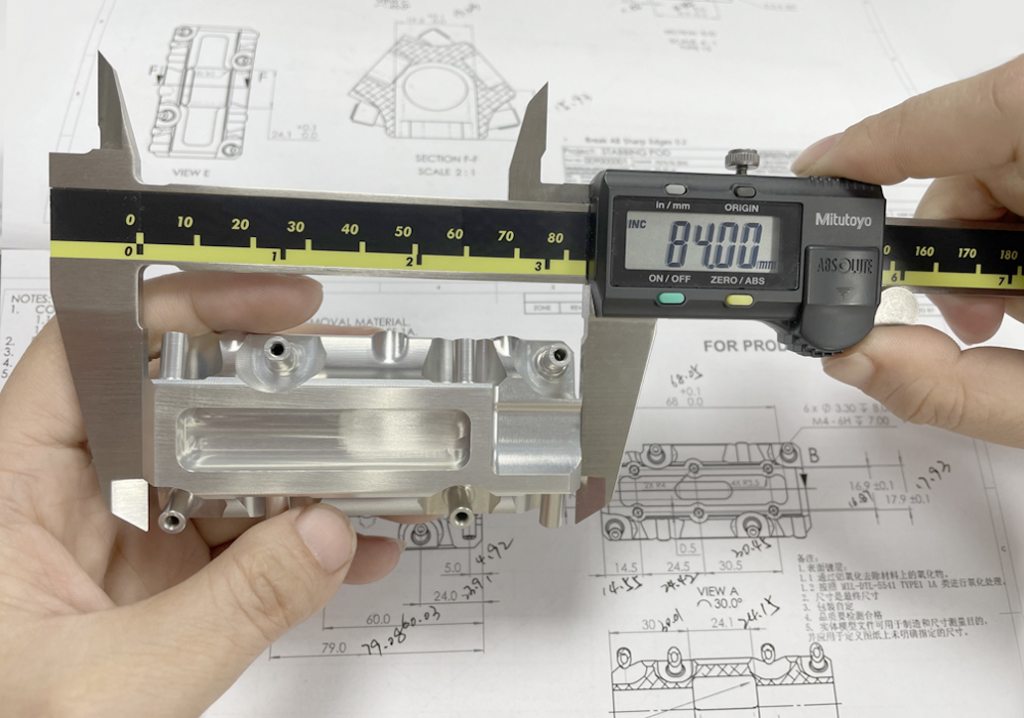
Inspection standards for CNC machining
To ensure that your products are 100% qualified
Categories

Try GREFEE now,for free
We keep your uploaded files confidential and secure.